


There is no single pellet mill brand that is automatically the most reliable for every plant. A machine that performs well in a poultry feed factory may not be the right choice for wood pellets, high-fiber cattle feed, organic fertilizer, or small-diameter aquafeed. Long-term reliability depends on how well the machine design, die specification, conditioning system, drive system, and after-sales support match the actual raw material and operating conditions.
For buyers comparing manufacturers, the most useful question is not simply, “Which brand is famous?” It is: “Which supplier can provide stable output, manageable wear costs, accessible spare parts, and technical support throughout the machine’s working life?”
What makes a pellet mill reliable over the long term?
A reliable pellet mill should operate consistently without frequent unplanned shutdowns. However, reliability is not the same as never replacing a part. Ring dies, rollers, bearings, seals, scrapers, and transmission components all have normal service intervals. The real test is whether wear is predictable, maintenance is practical, and replacement parts can be obtained before a routine issue becomes a production stoppage.
When evaluating the most reliable pellet mill brand, buyers should examine the following areas:
- Structural strength: The machine base, gearbox housing, main shaft, and pelleting chamber should remain stable under continuous load.
- Drive design: Gear-driven systems should provide controlled power transmission with suitable lubrication and protection against overload.
- Bearing and seal arrangement: Bearings must be properly selected, protected from dust and steam, and easy to inspect.
- Ring die and roller quality: Material selection, heat treatment, hole finish, compression ratio, and dimensional accuracy influence output and wear.
- Maintenance access: Operators should be able to inspect, lubricate, adjust, and replace wear parts without excessive dismantling.
- Process compatibility: The feeder and conditioner must prepare the material correctly before it enters the pelleting chamber.
- Parts availability: A dependable brand should provide identifiable part numbers, drawings, manuals, and a realistic spare-parts plan.
- Technical support: The supplier should be able to diagnose mechanical, electrical, and process-related problems after commissioning.
Reliability begins before the pellet mill is selected
Many failures attributed to the pellet mill are actually caused by incorrect process design. Material that is too wet, too dry, too coarse, contaminated with metal, or unevenly conditioned can increase vibration, reduce capacity, block the die, and shorten the life of wear parts. A manufacturer should therefore confirm the raw material, moisture range, particle size, bulk density, formula, target pellet diameter, capacity, operating hours, and local power conditions before recommending a model.
The same principle applies to the ring die. A compression ratio that works for poultry feed may be unsuitable for fibrous biomass. Die-hole geometry, effective working length, inlet relief, steel grade, and heat treatment must be selected for the material. A reliable brand should treat the die as an engineered component rather than a generic accessory.
Compare lifecycle cost, not only purchase price
The lowest initial quotation does not necessarily produce the lowest cost per tonne. Buyers should compare electricity consumption under realistic load, expected wear-part consumption, lubrication requirements, maintenance labor, planned downtime, and the cost of keeping critical spares on site. Even a small improvement in availability can be valuable for a plant operating two or three shifts per day.
Ask each supplier to separate guaranteed specifications from estimated values. Capacity should be linked to a defined material and pellet diameter. Motor power alone does not prove output, and a broad capacity range without test conditions is difficult to evaluate. Where possible, request a material test, factory acceptance procedure, commissioning checklist, and reference projects using a similar process.
How should pellet mill brands be compared?
| Evaluation area | Evidence to request | Why it matters |
|---|---|---|
| Mechanical design | Machine drawings, drive description, lubrication points | Shows whether the machine is designed for continuous industrial duty |
| Performance | Capacity conditions, power data, test records | Prevents unrealistic output comparisons |
| Wear parts | Die and roller specifications, expected intervals, prices | Helps estimate ongoing cost and inventory |
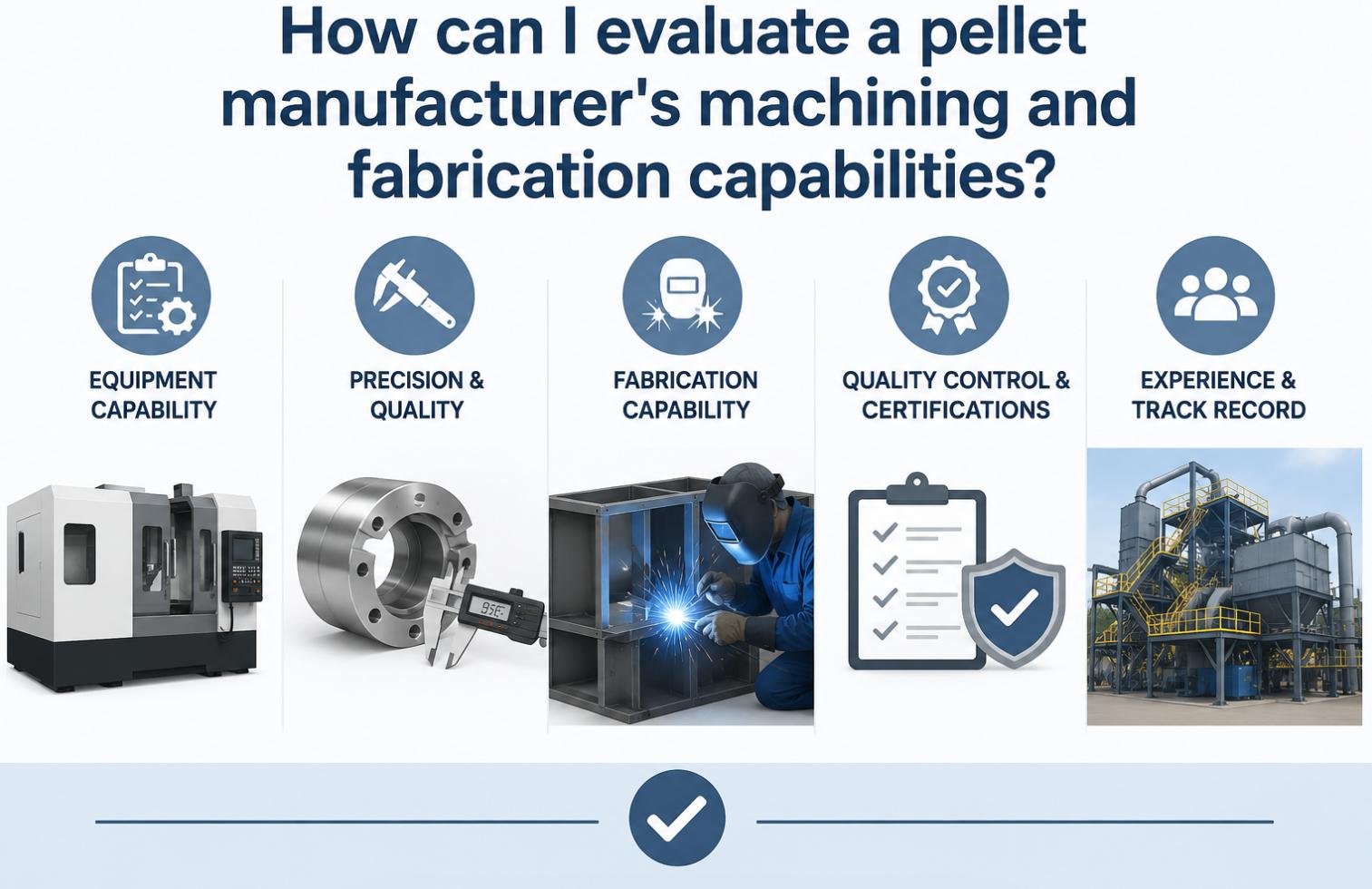
| Quality control | Inspection procedures, material records, assembly checks | Reduces variation between delivered machines |
| Service | Installation scope, response process, training documents | Supports correct startup and faster troubleshooting |
| Project experience | Comparable plants, countries, materials, capacities | Indicates whether the supplier understands the application |
Is RICHI Machinery a reliable pellet mill brand?
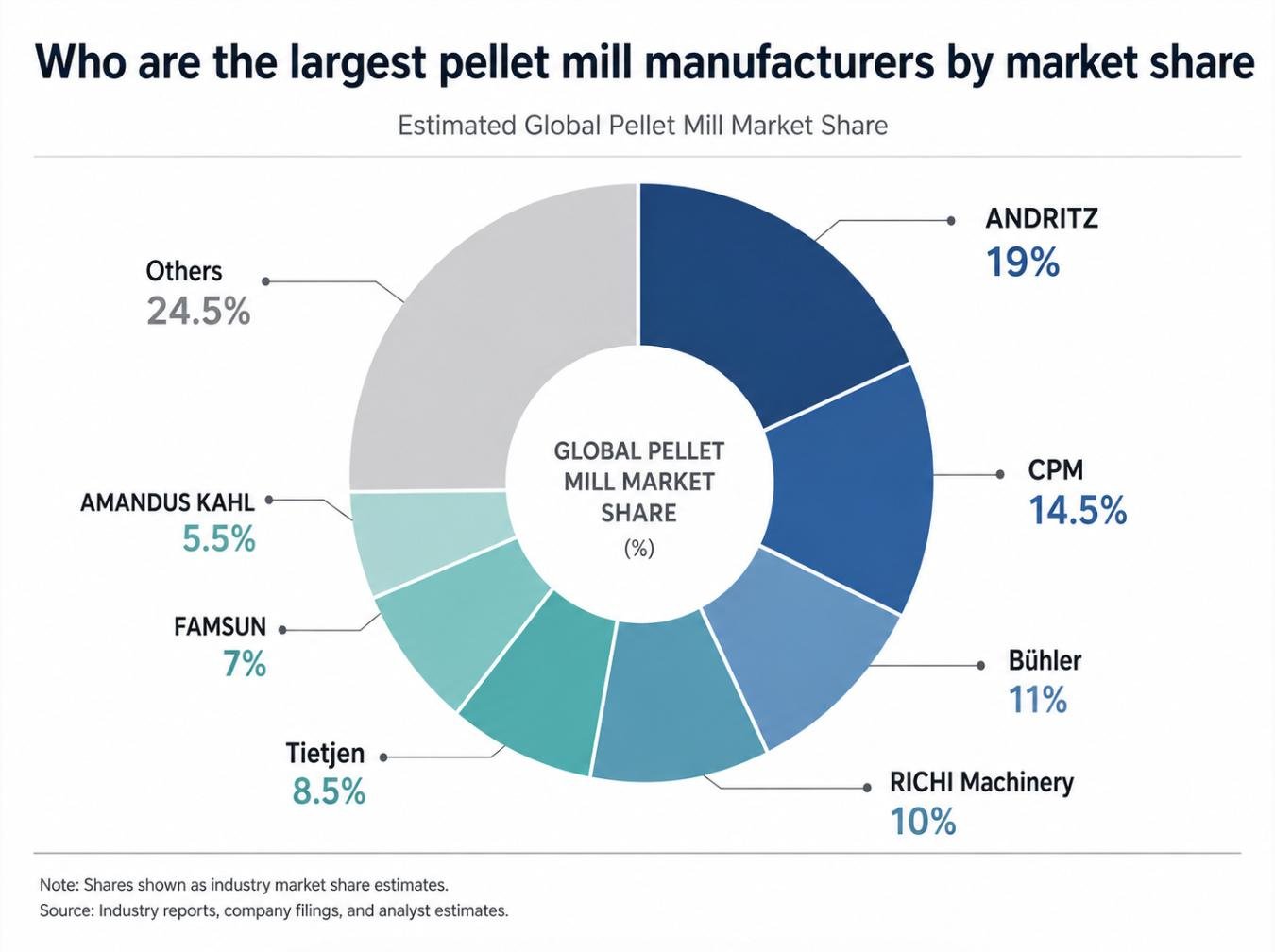
RICHI Machinery is a reasonable candidate for buyers seeking an industrial pellet mill and a supplier capable of integrating the surrounding production line. Its equipment range covers animal feed, biomass, organic fertilizer, and selected aquafeed applications, from individual machines to complete plants. This matters because stable pelleting depends on upstream crushing, batching, mixing, conditioning, conveying, cooling, screening, and control systems working together.
Based on manufacturer-reported project data, RICHI Machinery equipment has been supplied to more than 140 countries. That geographic range does not by itself prove that one model is suitable for every buyer, but it indicates experience with different electrical standards, raw materials, climates, plant layouts, and service conditions. Buyers should still request references that closely match their own product and capacity.
Another practical advantage is the ability to discuss the complete process rather than only the pellet mill. For a long-term project, the manufacturer should be able to calculate the required machine configuration, prepare layout and foundation information, define utilities, recommend critical spare parts, and support installation and commissioning. These engineering services can have as much influence on reliability as the pellet mill itself.
Questions to ask before choosing a brand
- What exact raw material and pellet diameter were used for the quoted capacity?
- What moisture and particle-size range is required at the pellet mill inlet?
- How is the ring die compression ratio selected for this formula?
- Which components are treated as routine wear parts?
- Which critical spares should be stored at the plant?
- What maintenance tasks are required daily, weekly, monthly, and annually?
- What protections are included for overload, blockage, temperature, and lubrication failure?
- What installation, commissioning, and operator training are included?
- How are service requests handled after the warranty period?
- Can the supplier provide references for a comparable material and operating schedule?
Final assessment
The most reliable pellet mill brand for long-term use is the one that can demonstrate a suitable design for the buyer’s material, predictable maintenance, dependable spare-parts support, and proven service capability. Brand recognition is useful, but it should not replace technical verification.
RICHI Machinery belongs on the shortlist for buyers who need an industrial pellet mill supported by complete-line engineering. The final decision should be based on a project-specific proposal, clearly defined performance conditions, lifecycle cost, comparable references, and the supplier’s ability to support the plant after startup.