



From Wood Waste to a Marketable Pet Product
The pet care industry has created new opportunities for businesses that can turn renewable or recycled materials into practical products. Among these opportunities, wood-based cat litter is particularly interesting because many woodworking operations already generate sawdust, wood chips, shavings, and other fibrous residues.
Instead of treating these materials purely as waste, manufacturers can process them into compact cat litter pellets with controlled size, moisture and density. The challenge, however, is not simply buying a pellet machine and pressing sawdust into pellets. A successful project requires a production concept that connects raw-material preparation, moisture management, pellet formation, cooling, screening and packaging.
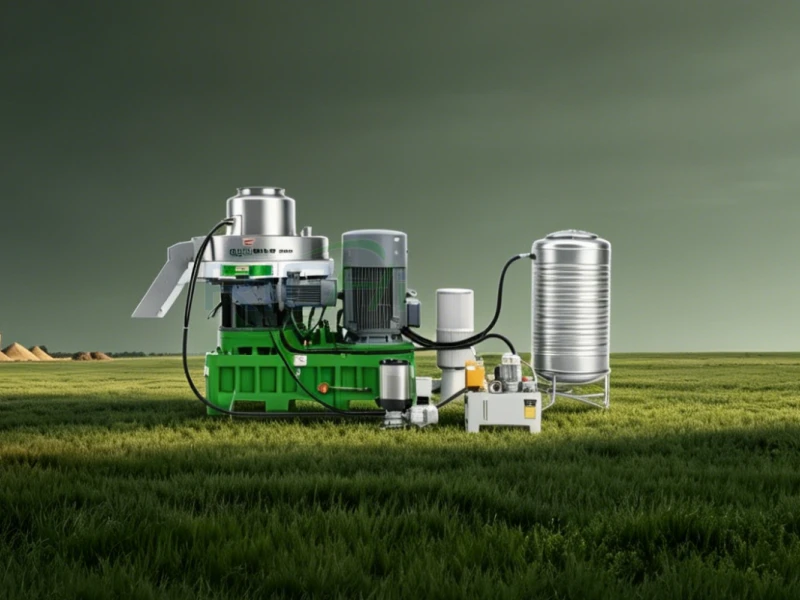
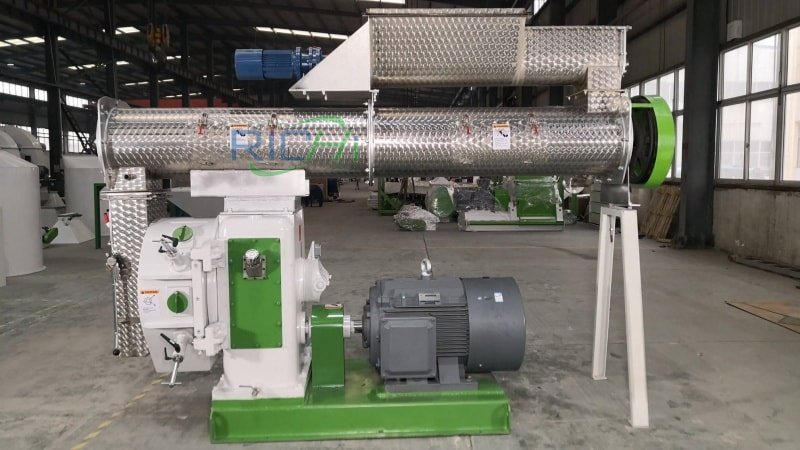
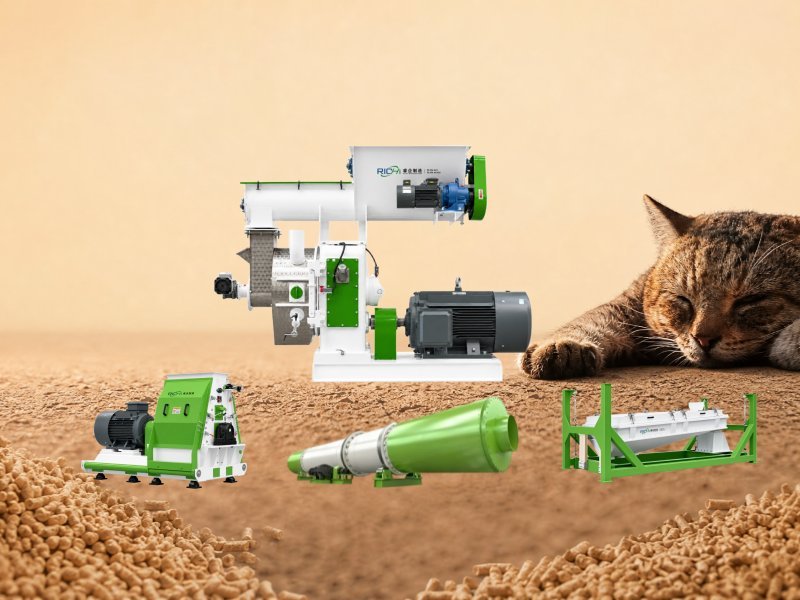
For businesses considering this type of investment, a cat litter pellet machine is only one part of the overall production system.
Why Sawdust Is Interesting for Cat Litter Production
Sawdust is generated by furniture factories, sawmills, wood-processing plants, plywood manufacturers and other woodworking businesses. Its availability can make wood-based cat litter attractive when the raw material can be obtained consistently.
Different types of wood waste behave differently during processing. Fine sawdust may already have a suitable particle size, while chips or shavings may require additional crushing. Moisture can also vary considerably depending on the source and storage conditions.
This means the first question should not be “Which machine should I buy?”
A better starting point is:
What does my raw material look like before processing?
A manufacturer should examine:
- Wood species
- Particle size
- Initial moisture
- Amount of bark or impurities
- Bulk density
- Storage conditions
- Availability throughout the year
- Required final pellet size
These factors influence the equipment configuration and operating conditions.
Why Moisture Control Matters
Moisture is one of the most important variables in wood pellet production.
If sawdust contains excessive moisture, pellet formation may become unstable. If the material is too dry, the material may not compact in the desired way. The correct operating range depends on the raw material and the specific pelletizing process.
For this reason, drying should be considered a process-control stage rather than simply a machine added somewhere in the factory.
A small wood-processing company may only need limited drying capacity if its raw material is already relatively dry. A larger operation handling freshly processed wood residues may need a dedicated industrial drying section.
For projects requiring continuous low-temperature drying, an industrial belt dryer machine for sale may be considered when the material characteristics and plant design are compatible with belt drying.
The important point is to size the dryer according to the actual amount of water that must be removed rather than simply matching the dryer capacity to the nominal pellet output.
What Happens Before Pelletizing?
Raw material preparation can vary substantially between projects.
For clean, fine sawdust, the preparation stage may be relatively simple. For wood chips, branches or larger wood residues, a more extensive preparation system may be necessary.
A typical preparation sequence could include:
- Raw material receiving
- Impurity removal
- Chipping or crushing
- Fine grinding
- Moisture adjustment
- Temporary storage
- Metered feeding
The purpose is to create a stable material stream before the pelletizing stage.
This is especially important for automated production because the pellet mill performs more consistently when material flow is stable.
Pellet Formation Is Only One Part of Quality Control
During pelletizing, pressure and friction compact the prepared material into a defined shape. For wood-based cat litter, pellet diameter and length can be adjusted according to product requirements and equipment configuration.
But appearance alone does not determine whether the finished product is commercially useful.
Manufacturers may also care about:
- Pellet durability
- Dust generation
- Moisture content
- Absorption characteristics
- Pellet size consistency
- Packaging stability
- Storage behavior
This is why cooling and screening are important after pellet formation.
Fresh pellets can be warm and may contain residual moisture. Cooling helps stabilize the product before packaging, while screening separates excessive fines and unwanted particles.
Could One Factory Produce More Than One Product?
One interesting business model is the flexible use of wood residues.
A company that already operates a biomass processing plant may have access to the same general raw-material stream required for several products. Depending on equipment configuration, production planning and market requirements, the facility may be designed to process wood residues into fuel pellets or other pelletized products.
This approach can potentially improve raw-material utilization, but it requires careful planning.
The same machine should not automatically be assumed to produce every type of pellet with identical settings. Product density, pellet diameter, raw-material moisture and formulation can all influence the operating conditions.
Therefore, businesses interested in multiple products should discuss the intended product range before finalizing equipment.
Capacity Should Follow the Business Model
A common mistake among new investors is selecting equipment based only on the largest possible production capacity.
A better approach is to estimate:
Available raw material → expected operating hours → target finished product → sales volume → required production capacity
For example, a company with limited sawdust availability may not benefit from installing a very large production line. Conversely, a large sawmill generating substantial quantities of residues every day may need a much higher-capacity system.
Production capacity should also account for downtime, maintenance, raw-material fluctuations and packaging requirements.
The goal is not simply to build the largest plant.
The goal is to build a plant that can operate consistently with the available resources.
Where Does Packaging Fit Into the Process?
Packaging is sometimes treated as an afterthought, but it directly affects the final commercial product.
Retail cat litter may require relatively small bags, while wholesale products can use larger packaging formats. Automatic weighing and bagging systems can be integrated when production volume justifies automation.
Before selecting packaging equipment, manufacturers should determine:
- Bag size
- Packaging material
- Target filling weight
- Number of bags per hour
- Whether automatic sealing is required
- Whether multiple product sizes will be sold
A well-designed production line should consider packaging capacity alongside pelletizing capacity.
There is little benefit in producing several tons of pellets per hour if the packaging section can process only a fraction of that output.
What Makes a Cat Litter Project Scalable?
Scalability is not necessarily about installing oversized equipment from day one.
A more practical strategy is to design the plant around modular growth.
For example, a business might begin with one product type and later add:
- Additional pelletizing capacity
- More drying capacity
- New raw-material handling systems
- Automated packaging
- Additional screening
- Different pellet specifications
The layout should leave enough space for future modifications.
Electrical systems, conveyors, dust collection, storage and material flow should also be considered during the initial plant design.
Choosing Equipment by Raw Material Instead of Marketing Claims
Equipment suppliers often use phrases such as “high efficiency,” “advanced technology” or “professional solution.” These descriptions can be difficult to compare objectively.
A more useful purchasing process is to ask technical questions.
For example:
- What raw material will be tested?
- What moisture range is recommended?
- What final pellet diameter is required?
- What capacity can be achieved with this specific raw material?
- Is drying required?
- How will fines be handled?
- What cooling system is recommended?
- What spare parts are required?
- How will the equipment be maintained?
A supplier that can answer these questions with a process-based proposal gives the buyer more useful information than a simple equipment price list.
Building a Product Rather Than Buying a Machine
Wood-based cat litter production should ultimately be viewed as a product-development project.
The machine is important, but the final product depends on the relationship between raw material, formulation, moisture, pelletizing conditions, drying, cooling, screening and packaging.
Businesses that already have access to wood residues have one potential advantage: they can start with a relatively familiar raw-material source.
The next step is determining whether that material can consistently meet the requirements of the intended cat litter product.
For companies exploring complete processing systems, information about industrial wood pellet machine for sale can also be useful when comparing different approaches to wood-residue processing. However, the final equipment configuration should always be based on the specific cat litter product rather than simply copying a conventional fuel-pellet plant.
A practical project therefore begins with raw-material testing, product definition and capacity planning. Once those factors are clear, the machinery selection becomes much more straightforward.
Businesses researching equipment specifications, processing concepts and project examples can discover this info here before making their final equipment decisions.