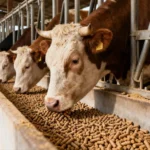




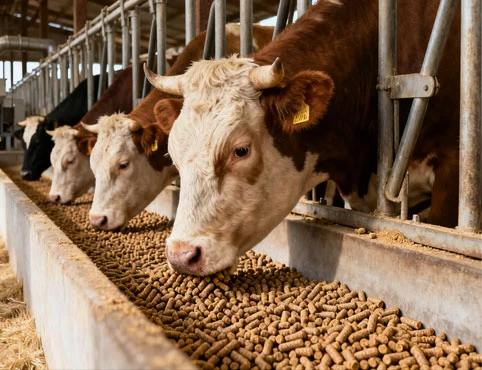
Good cattle nutrition depends on more than selecting high-quality ingredients. The way feed is processed can also affect how consistently nutrients are delivered, how easily feed can be handled, and how well cattle consume the finished product. Modern cattle feed technology combines formulation, grinding, batching, mixing, conditioning, pelleting, cooling, screening, coating, and packaging to produce feed with controlled nutritional and physical characteristics.
For dairy farms, beef cattle operations, and commercial feed manufacturers, the objective is to provide cattle with a balanced diet containing appropriate levels of energy, protein, fiber, minerals, vitamins, and other nutrients. However, if ingredients are not properly processed, even a well-designed formula may not be distributed evenly throughout the final feed.
Modern processing technology helps solve this problem.
A well-designed cattle feed production line can transform grains, forage, oilseed meals, agricultural byproducts, and additives into a consistent feed product. Pellet production is particularly important because it combines multiple ingredients into compact units, reducing the risk of physical separation during handling and transportation.
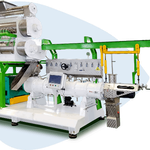
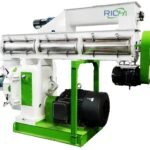
A cattle feed pellets machine is one of the key pieces of equipment used in this process. However, better nutrition is achieved through the interaction of the entire production system rather than through one machine alone.
What Is Cattle Feed Technology?
Cattle feed technology refers to the equipment, processing methods, automation systems, and quality-control procedures used to manufacture cattle feed.
A modern production line may include:
- Raw material cleaning equipment
- Hammer mills
- Bale breakers
- Feed crushers
- Batching systems
- Feed mixers
- Steam conditioners
- Pellet mills
- Pellet coolers
- Vibrating screens
- Coating machines
- Packing machines
- Conveyors
- Bucket elevators
- Automatic control systems
The exact configuration depends on the feed formula, raw materials, production capacity, pellet size, and required automation level.
The purpose of this technology is not simply to increase production speed. It also helps maintain nutritional consistency and improve the physical characteristics of the finished feed.
Why Processing Technology Matters for Cattle Nutrition
Cattle require a balanced combination of nutrients.
Depending on the production stage and feeding objective, a cattle diet may contain:
- Energy
- Protein
- Fiber
- Minerals
- Vitamins
- Fat
- Carbohydrates
- Other nutritional components
These nutrients can come from ingredients such as corn, barley, wheat, soybean meal, sunflower meal, cottonseed cake, rice bran, alfalfa, grass hay, straw, silage, molasses, mineral supplements, and vitamin premixes.
However, simply putting these ingredients together does not guarantee a uniform diet.
Consider a feed formula containing corn, soybean meal, wheat bran, minerals, and vitamins. The ingredients have different particle sizes, densities, and physical characteristics. During transportation or storage, heavier particles may separate from lighter ones.
As a result, one portion of loose feed may contain a different nutrient composition from another portion.
Processing technologies such as grinding, mixing, and pelleting help reduce this problem.
1. Accurate Feed Formulation Supports Better Nutrition
The foundation of good cattle nutrition is a suitable feed formula.
A feed manufacturer first determines the nutritional objectives of the product and then selects appropriate raw materials.
For example, a formula may combine energy-rich grains with protein meals, fiber sources, minerals, and vitamin premixes.
Modern feed production systems can use computerized formulation and batching systems to manage ingredient quantities.
Accurate batching is important because even small ingredients may have significant nutritional functions.
Mineral mixtures and vitamin premixes are often included at relatively low inclusion rates. If they are not distributed properly, the nutritional consistency of the finished feed can be affected.
Automated weighing systems can help ensure that ingredients are added according to the intended formula.
2. Grinding Improves Ingredient Preparation
Grinding technology plays an important role in preparing ingredients for cattle feed production.
Whole grains and other materials may need to be reduced to an appropriate particle size before mixing.
Hammer mills are widely used for this purpose.
The objective is to achieve a particle size suitable for the feed formula and downstream pelletizing process.
Proper grinding can improve:
- Mixing uniformity
- Ingredient distribution
- Pellet formation
- Feed texture
- Processing stability
However, grinding should not simply aim for the smallest possible particle size.
Excessive grinding can increase energy consumption and may not provide additional nutritional benefits.
The appropriate particle size should therefore be determined according to the ingredients, formula, cattle category, and production process.
3. Mixing Technology Helps Distribute Nutrients
Mixing is one of the most important processes for nutritional consistency.
Once ingredients have been weighed, they need to be distributed evenly throughout the batch.
A properly designed feed mixer combines major ingredients with smaller components such as mineral and vitamin premixes.
Good mixing helps ensure that each portion of feed contains approximately the intended proportions of the different ingredients.
This is particularly important when the formula contains small amounts of high-value additives.
Mixing performance depends on:
- Mixer design
- Ingredient particle size
- Mixing time
- Filling level
- Ingredient sequence
- Moisture content
- Liquid ingredient addition
A poorly mixed batch can create nutritional variation even when the original formula is correctly calculated.
4. Batching Accuracy Reduces Nutritional Variation
Automated batching is another important technology for modern cattle feed production.
A batching system uses weighing equipment to measure ingredients before they enter the mixer.
For example, a production line may have separate bins for corn, barley, soybean meal, wheat bran, and other major ingredients.
Small ingredients can be handled using more precise dosing systems.
Automation can help reduce human weighing errors and improve batch-to-batch consistency.
For commercial feed manufacturers producing thousands of tons of feed, this consistency is important because customers expect the same product to maintain similar specifications over time.
5. Steam Conditioning Supports Pellet Quality
Steam conditioning is widely used before pelletizing.
During conditioning, the feed mixture is exposed to controlled amounts of steam. This increases temperature and moisture and changes the physical properties of the material.
The conditioned material becomes more suitable for compression.
Proper conditioning can improve:
- Pellet formation
- Pellet durability
- Material binding
- Production stability
- Reduction of fines
Conditioning can also influence how nutrients and ingredients behave during processing.
However, the conditions must be carefully controlled. Excessive heat may not be appropriate for certain heat-sensitive components, while insufficient conditioning can result in weak pellets.
The process should therefore be optimized according to the actual feed formulation.
6. How a Cattle Feed Pellets Machine Supports Nutritional Consistency
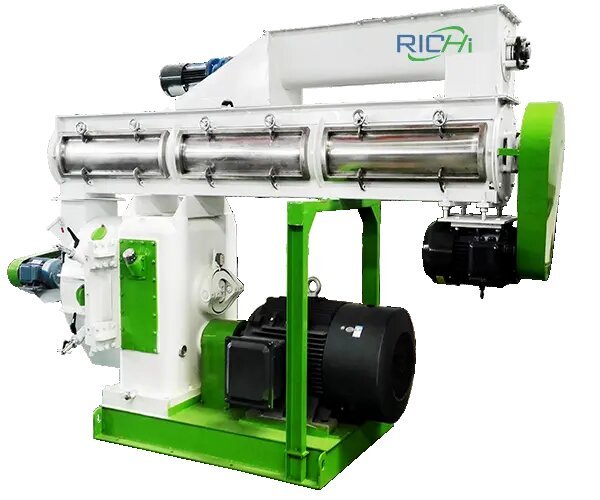
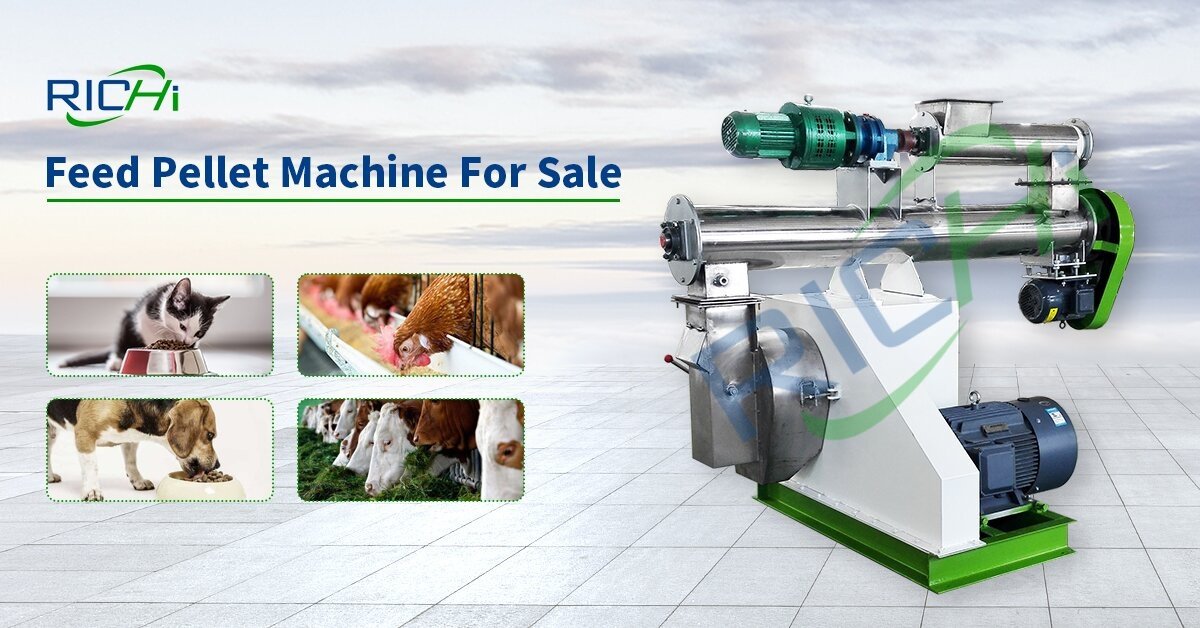
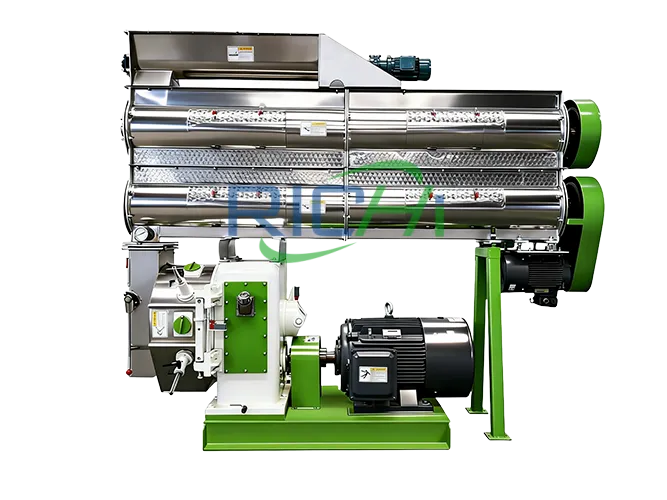
A cattle feed pellets machine converts the prepared feed mixture into compact pellets.
The pelletizing process is particularly valuable for nutritional consistency because multiple ingredients are physically bound together.
Instead of transporting corn, bran, soybean meal, mineral particles, and other components as separate loose particles, the ingredients become part of a compact pellet.
This can reduce physical segregation during transportation and handling.
For example, if a loose feed mixture is transported over a long distance, ingredients with different densities may separate. Pelleting reduces this tendency by combining ingredients into a more uniform physical product.
The pellet machine also allows manufacturers to produce feed with a controlled pellet diameter.
The appropriate pellet size depends on the feed product and target cattle group.
(Learn more: https://richipelletizer.com/cattle-feed-pellet-mill-for-sale/)
7. Pelletizing Can Reduce Ingredient Separation
Ingredient separation is a common challenge in loose feed.
Different ingredients have different:
- Particle sizes
- Densities
- Shapes
- Surface characteristics
During transportation, vibration can cause some materials to move toward different areas of the feed.
Pelleting reduces this problem.
When the feed mixture is compressed into pellets, many individual ingredients are incorporated into the same physical unit.
This helps maintain a more consistent distribution of ingredients from production through feeding.
As a result, cattle are more likely to receive a consistent combination of ingredients when consuming the feed.
8. Pellet Size Can Be Adapted to Feeding Requirements
Modern cattle feed technology allows manufacturers to produce different pellet sizes.
Pellet diameter can be controlled by changing the pellet die.
Different cattle groups may have different feeding requirements and preferences.
For example, young cattle may require smaller particles than mature cattle, while different commercial feed products may have different specifications.
Controlling pellet size also helps feed manufacturers produce specialized products for different markets.
9. Pellet Durability Helps Preserve Feed Quality
Nutritional quality can be affected by physical degradation during transportation.
If pellets are weak, they may break into smaller pieces and generate excessive fines.
These fines can create several problems.
They may separate from larger pellets, creating an uneven mixture. They may also create dust and increase material losses during transportation.
Pellet durability depends on several factors, including:
- Raw material composition
- Particle size
- Moisture
- Conditioning
- Die compression
- Roller adjustment
- Pellet mill operation
- Cooling
Therefore, pellet durability should be considered as part of the complete production process.
10. Cooling Protects the Finished Feed
Fresh pellets leave the pellet mill at an elevated temperature.
They also contain moisture introduced during conditioning.
A cooling system reduces pellet temperature and helps remove excess moisture before storage.
Proper cooling is important for maintaining feed stability.
If warm pellets are packaged too quickly, moisture can redistribute inside the package and potentially create storage problems.
A pellet cooler therefore contributes indirectly to maintaining the quality of the nutrients and physical properties of the final feed.
11. Screening Improves Product Uniformity
After cooling, pellets are normally screened.
A vibrating screen separates acceptable pellets from fines and broken particles.
This creates a more consistent final product.
Screening can also allow fines to be returned to the production process, depending on the line configuration.
By controlling the amount of fines, manufacturers can improve the physical consistency of the finished feed.
12. Liquid Addition Technology Improves Formula Flexibility
Some cattle feed formulas contain liquid ingredients such as molasses or selected oils.
These ingredients need to be distributed evenly.
Modern liquid addition systems can spray controlled amounts of liquid into the mixer or onto finished pellets.
Controlled spraying can reduce localized accumulation and improve distribution.
For certain heat-sensitive ingredients, post-pellet coating may be considered.
This provides manufacturers with additional flexibility when designing cattle feed formulas.
13. High-Fiber Feed Requires Specialized Processing
Forage is an important component of many cattle diets.
Common forage ingredients include:
- Alfalfa
- Grass hay
- Straw
- Silage-related materials
- Other fibrous agricultural resources
High-fiber ingredients can be more difficult to process than grains.
Long fibers may create problems during feeding, grinding, mixing, and pelleting.
A modern forage pellet production system may therefore include bale breakers, forage crushers, hammer mills, mixers, conditioners, and pellet mills.
The processing technology should be selected according to the proportion and characteristics of the forage in the formula.
14. Agricultural Byproducts Can Be Used More Efficiently
Modern feed technology also makes it easier to use agricultural byproducts.
Depending on local availability and nutritional requirements, cattle feed manufacturers may use materials such as:
- Wheat bran
- Rice bran
- Cottonseed cake
- Sunflower meal
- Date pulp
- Other agricultural processing residues
These materials can vary significantly in moisture, fiber, density, and particle size.
Grinding, mixing, conditioning, and pelleting technology can help convert these materials into more consistent feed products.
Using suitable local resources may also give manufacturers greater flexibility when designing feed formulas.
15. Moisture Control Supports Feed Stability
Moisture affects both feed processing and storage.
Raw materials can have different moisture levels when they enter the factory.
During conditioning, additional moisture is introduced through steam. During cooling, some moisture is removed.
Modern production systems therefore need to control moisture throughout the process.
Important control points include:
- Incoming raw materials
- Ground materials
- Mixed feed
- Conditioned feed
- Fresh pellets
- Cooled pellets
- Packaged feed
Consistent moisture management supports stable pellet quality and storage performance.
16. Temperature Control Is Important
Temperature is another important processing parameter.
Steam conditioning increases feed temperature before pelleting.
The pellet mill itself also generates heat through compression and friction.
After pelleting, cooling reduces the temperature before packaging.
Proper temperature control helps maintain the physical properties of the pellets and supports stable processing.
Feed manufacturers should therefore consider temperature as part of the complete production process rather than focusing only on the pellet mill.
17. Automation Supports Consistent Nutrition
Automation helps connect the different stages of feed production.
A centralized control system can manage:
- Ingredient batching
- Grinding
- Mixing
- Conditioning
- Pelletizing
- Cooling
- Screening
- Packaging
Automation can reduce manual errors and help maintain consistent processing parameters.
For example, a computerized batching system can recall different feed formulas and automatically calculate the required quantities of ingredients.
This is especially useful for feed factories producing multiple cattle feed products.
18. Quality Control From Raw Material to Finished Pellets
Better nutrition requires quality control throughout the production process.
Raw Material Control
Ingredients should be checked for quality, moisture, contamination, and other relevant characteristics.
Grinding Control
Particle size should remain within the desired range.
Batching Control
Ingredient quantities should correspond with the feed formula.
Mixing Control
The mixture should achieve the required uniformity.
Conditioning Control
Moisture and temperature should be appropriately managed.
Pelletizing Control
Pellet size, durability, and production stability should be monitored.
Cooling Control
Finished pellets should reach suitable temperature and moisture conditions before storage.
Final Product Control
The packaged product should meet the intended physical and nutritional specifications.
This multi-stage approach is more reliable than checking quality only after production has been completed.
19. Feed Technology Supports Consistent Nutrient Delivery
One of the main advantages of modern processing is the ability to make nutrient delivery more consistent.
Consider a cattle feed containing corn, soybean meal, bran, minerals, and vitamins.
If the ingredients remain as a loose mixture, differences in particle size and density may cause separation.
Grinding reduces particle-size differences.
Mixing distributes ingredients.
Pelleting then physically combines many of these components into a compact product.
The result is a feed that is easier to transport and less prone to physical segregation.
20. Feed Processing and Feed Intake
Physical characteristics can also influence how cattle interact with feed.
Pellets are generally easier to handle mechanically than loose mixtures.
Their uniform shape and size can make them suitable for automated feeding systems.
In some production systems, pelleted feed can also reduce the sorting of individual ingredients compared with certain loose mixtures.
This can help cattle consume a more consistent combination of ingredients.
However, actual animal performance depends on the complete diet, feeding management, animal condition, forage availability, and many other factors. Pelletizing itself does not replace proper nutritional formulation.
21. Technology Does Not Replace Feed Formulation
It is important to distinguish feed processing from nutritional formulation.
A pellet mill can improve the physical form of feed, but it cannot correct an improperly designed diet.
Good cattle nutrition still requires an appropriate formulation based on factors such as:
- Animal type
- Growth stage
- Milk production
- Beef production objectives
- Forage availability
- Energy requirements
- Protein requirements
- Mineral requirements
Processing technology then helps manufacture that formula consistently.
In other words, formulation determines what nutrients should be supplied, while processing technology helps deliver the formulated ingredients in a consistent physical form.
22. Energy Efficiency and Nutritional Quality
Efficient feed production should balance energy consumption with product quality.
Grinding and pelletizing consume significant amounts of energy.
If raw materials are ground excessively fine or the pellet mill operates under unsuitable conditions, energy consumption can increase.
However, reducing processing intensity too much can negatively affect pellet quality.
The objective is therefore to identify suitable operating conditions that provide the required feed quality without unnecessary energy consumption.
Monitoring electricity consumption per ton of feed can help manufacturers evaluate production efficiency.
23. Choosing the Right Pellet Mill Technology
When selecting pelletizing equipment, manufacturers should consider:
Feed Formula
The machine should be suitable for the intended raw materials.
Capacity
The machine should match the target production rate.
Pellet Size
The die should support the required pellet diameter.
Fiber Content
High-fiber formulas may require different compression characteristics.
Automation
Large commercial factories may benefit from automatic feeding, lubrication, monitoring, and control.
Maintenance
Easy access to wear components can simplify maintenance.
Supporting Equipment
The pellet mill should work together with the mixer, conditioner, cooler, screen, and packaging system.
Choosing a pellet machine based solely on its rated capacity can result in an unbalanced production line.
24. Designing a Complete Cattle Feed Production Line
A typical modern production process can be arranged as:
Raw Material Receiving → Cleaning → Grinding → Batching → Mixing → Conditioning → Pelletizing → Cooling → Screening → Coating → Packaging
Not every factory requires all of these stages.
For example, a small operation using already-prepared feed ingredients may not require an extensive cleaning or grinding section.
A large commercial factory, on the other hand, may need multiple storage bins, automatic batching, several grinding systems, multiple mixers, large pellet mills, cooling systems, screening equipment, and automated packaging.
The production line should therefore be customized according to actual requirements.
(You may want to learn about commercial cattle feed manufacturing plant cost)
25. How to Improve Nutritional Consistency in a Cattle Feed Plant
Several practical measures can improve consistency.
Standardize Raw Materials
Work with clear ingredient specifications.
Control Particle Size
Maintain appropriate grinding conditions.
Calibrate Weighing Equipment
Regularly verify batching accuracy.
Optimize Mixing Time
Avoid both insufficient and excessive mixing.
Monitor Conditioning
Control steam, temperature, and moisture.
Maintain the Pellet Mill
Inspect dies, rollers, lubrication, and feeding systems.
Control Cooling
Ensure pellets reach appropriate temperature and moisture before storage.
Screen Finished Pellets
Remove excessive fines and broken material.
Maintain Production Records
Record batches, production output, and quality results.
These practices create a more controlled production environment.
26. Preventive Maintenance Protects Feed Quality
Equipment maintenance is not only about preventing mechanical failure.
It can also help maintain feed quality.
For example, worn pellet mill components may change compression conditions. A damaged mixer component may reduce mixing efficiency. A blocked cooler may reduce cooling performance.
Regular maintenance can therefore help maintain stable processing conditions.
Important equipment to include in a preventive maintenance program includes:
- Hammer mills
- Mixers
- Pellet mills
- Conditioners
- Coolers
- Screens
- Conveyors
- Packing machines
27. The Role of Turnkey Engineering
For investors planning a complete cattle feed factory, turnkey engineering can help integrate nutrition-oriented processing requirements with equipment selection.
A turnkey service may include:
- Feed formula and raw material analysis
- Process flow design
- Equipment selection
- Factory layout
- Equipment manufacturing
- Transportation
- Installation
- Commissioning
- Operator training
- After-sales support
This integrated approach can help ensure that each machine has the appropriate capacity and works correctly with the next stage.
For example, the grinding section should provide enough material for the batching and mixing system, while the pellet mill should match the mixer and cooler capacity.
(click this site: RICHI Pelletizer )
28. Small-Scale and Large-Scale Cattle Feed Production
The technology used depends partly on production scale.
Small-Scale Production
A small farm may use a compact grinding, mixing, and pelletizing system.
The operator may manually feed ingredients into the production line.
Medium-Scale Production
A medium-sized feed plant may use automatic batching, larger mixers, ring die pellet mills, cooling, screening, and semi-automatic packaging.
Large Commercial Production
A large feed factory may use fully automated batching, multiple grinding and mixing lines, industrial pellet mills, automatic cooling and screening, coating, packaging, palletizing, and centralized production control.
The objective is not to use the most complicated technology available, but to select the technology appropriate for the production requirements.
29. How Modern Technology Supports Long-Term Feed Quality
Feed quality should remain stable not only during production but also during transportation and storage.
Pellet durability, moisture control, cooling, screening, and packaging all contribute to maintaining product quality after the feed leaves the pellet mill.
A well-produced pellet should be able to withstand normal handling without excessive breakage.
Proper packaging can further protect the finished product from environmental conditions during storage and transportation.
Therefore, the production process should consider the complete product lifecycle.
30. Future Trends in Cattle Feed Technology
Cattle feed technology is moving toward greater automation, flexibility, energy efficiency, and data-based process management.
Future production systems may increasingly integrate:
- Automated formulation management
- Real-time process monitoring
- Intelligent batching
- Automated equipment adjustment
- Energy monitoring
- Predictive maintenance
- Digital production records
At the same time, feed manufacturers are likely to continue exploring local agricultural resources and byproducts.
This will require flexible processing systems capable of handling a wide range of raw materials.
Conclusion
Cattle feed technology supports better nutrition by improving the consistency, uniformity, physical stability, and handling characteristics of manufactured feed.
The process begins with appropriate feed formulation and raw material selection. Cleaning removes impurities, grinding prepares ingredients, accurate batching controls proportions, and mixing distributes nutrients throughout the feed mixture. Steam conditioning prepares the material for pelletizing, while a cattle feed pellets machine converts the prepared mixture into compact and more uniform pellets.
Cooling, screening, coating, packaging, and automation then help maintain the quality of the finished product.
The most important point is that no single machine can guarantee better cattle nutrition. Nutritional quality begins with an appropriate formulation, while processing technology helps manufacture and deliver that formulation consistently.
For feed manufacturers planning a new cattle feed plant, the production line should be designed according to the actual feed formulas, raw materials, target capacity, pellet specifications, automation requirements, and factory conditions.
With the right combination of formulation, processing technology, equipment, and quality control, cattle feed manufacturers can produce more consistent feed products and build a reliable production system capable of meeting the needs of modern dairy and beef cattle operations.