






Premix feed plays an important role in modern livestock production because vitamins, minerals, amino acids, and other micro-ingredients need to be supplied accurately and consistently. Although these ingredients may account for only a small percentage of a complete feed formula, their nutritional importance is much greater than their physical quantity suggests.
Producing premix therefore requires a different approach from ordinary livestock feed processing. The main challenge is not simply achieving high output. Instead, manufacturers need to maintain accurate weighing, uniform mixing, controlled material flow, low cross-contamination, and stable product quality.
For farms and feed manufacturers considering their own premix production facilities, understanding the complete process can make equipment selection and workshop planning much more practical.
What Exactly Is Premix Feed?
Premix is a concentrated mixture of micro-ingredients that is later incorporated into a larger quantity of complete feed.
Depending on the formulation, a premix may contain vitamins, trace minerals, amino acids, enzymes, antioxidants, and other functional additives. The composition varies according to the animal species, growth stage, production objective, and nutritional requirements.
For example, a premix intended for broilers will not necessarily have the same composition as one designed for dairy cattle. Piglets, layers, beef cattle, and aquaculture species can also require different combinations and inclusion rates.
Because some components are used in very small quantities, accurate dosing becomes essential. A small error in the addition of a concentrated ingredient can have a much larger impact on the final formula than a similar percentage error involving a major ingredient.
This is why premix production places particular emphasis on weighing and mixing accuracy.
Why Is Premix Production Different From Conventional Feed Production?
Conventional livestock feed often contains large quantities of ingredients such as corn, wheat, soybean meal, bran, and forage materials. Premix production, by comparison, deals with much smaller quantities of highly concentrated ingredients.
This creates several technical challenges.
First, the weighing system must be sufficiently sensitive to handle small batches accurately. Second, the mixer needs to distribute micro-ingredients uniformly throughout the carrier material. Third, material handling systems should minimize residue because even a small amount of leftover premix can affect the next batch.
Cleaning and process sequencing are therefore especially important.
A well-designed premix feed mill focuses on controlled material flow rather than simply maximizing production speed. The objective is to produce a consistent mixture in every batch.
Which Raw Materials Are Commonly Used?
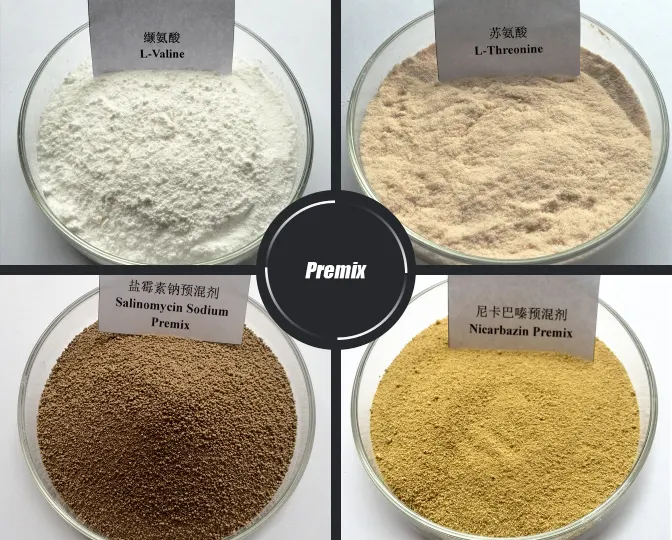
Premix formulations can contain many different ingredients, but they are generally divided into several categories.
Vitamins
Vitamins may include A, D, E, K, and various B-group vitamins. They support processes such as growth, metabolism, immunity, and reproduction.
Minerals
Mineral components can include calcium, phosphorus, zinc, iron, copper, manganese, selenium, iodine, and other trace elements.
Amino Acids
Amino acids such as lysine, methionine, threonine, and tryptophan can be included to help balance the amino acid profile of the final feed.
Functional Ingredients
Depending on the formulation, premixes may also contain enzymes, antioxidants, probiotics, organic acids, or other specialized additives.
Carrier Materials
A carrier helps distribute concentrated micro-ingredients throughout the mixture. Suitable carriers may include bran, rice hull derivatives, limestone powder, or other materials selected according to the formulation.
The choice of carrier can influence flowability, mixing performance, density, and final product stability.
How Should Premix Ingredients Be Proportioned?
There is no universal premix formula because nutritional requirements vary between species and production stages.
A formulation should normally be developed from the nutritional requirements of the target animal. The nutritionist then determines the required quantities of vitamins, minerals, amino acids, and other additives.
One important principle is to distinguish between the inclusion rate of an ingredient in the premix and its final inclusion rate in complete feed.
For example, an additive may represent a relatively large percentage of a premix while being included at only a very small level in the final feed.
This concentrated nature means that calculation errors need to be avoided at every stage. Formula management software and calibrated weighing equipment can help reduce manual calculation mistakes.
Why Is a Carrier Important in Premix Production?
Some micro-ingredients are difficult to distribute evenly because they are used in extremely small quantities.
A carrier provides additional bulk and helps spread these components through the mixture.
The carrier should have suitable particle size, moisture, density, and flow characteristics. If the carrier behaves very differently from the micro-ingredients, segregation may occur during storage or transportation.
For this reason, carrier selection should be considered as part of the formulation rather than treated as an afterthought.
The ideal carrier also depends on the final application. A premix intended for cattle feed may use a different carrier system from a specialized poultry or pig feed formulation.
How Does the Premix Production Process Work?
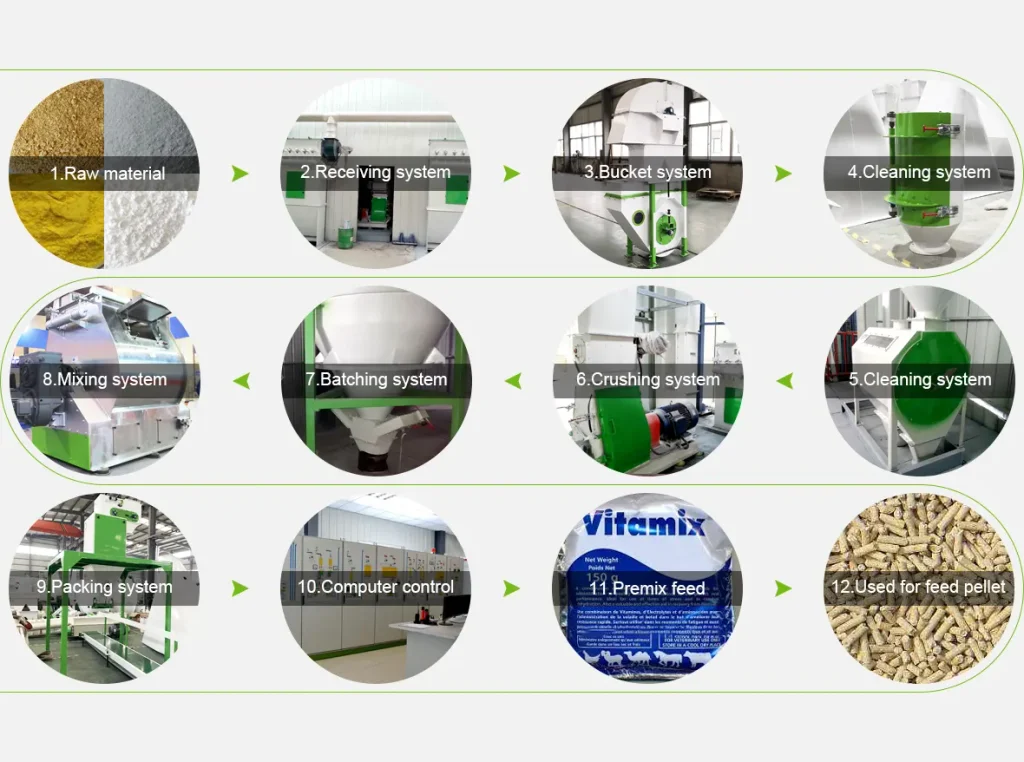
A typical process includes raw material receiving, storage, screening, weighing, premixing, main mixing, temporary storage, and packaging.
The process usually begins with ingredient inspection. Materials should be checked for identity, moisture, contamination, and other quality characteristics.
After storage, ingredients are weighed according to the formula. Very small quantities may require precision dosing systems or manual verification depending on production scale.
Some micro-ingredients are first blended into an intermediate premix. This helps improve distribution before the material enters the main mixer.
The mixture then undergoes a controlled mixing cycle. Once mixing is completed, the finished premix is transferred to a holding bin or packaging station.
The exact process varies according to the product and capacity.
Why Is Premixing Necessary?
Premixing can significantly improve the distribution of micro-ingredients.
Imagine a formula containing several ingredients that are each used at only a few hundred grams. Adding all of them directly into a large mixer may make uniform distribution difficult.
Instead, the smallest quantities can first be combined with a suitable carrier or intermediate material. This creates a more manageable mixture that can then be incorporated into the larger batch.
Premixing is particularly useful when formulations contain multiple low-inclusion ingredients.
However, premixing should not be confused with simply mixing everything for a longer period. The sequence of ingredient addition, batch size, mixer design, and material characteristics all affect uniformity.
What Type of Mixer Is Suitable?
Mixer selection depends on batch size, formulation, ingredient characteristics, and required mixing uniformity.
Ribbon mixers, paddle mixers, and other industrial mixing systems may be used in feed applications.
For premix production, the mixer should be able to handle relatively small inclusion rates without creating significant segregation.
The working volume should also be considered. A mixer designed for very large batches may not perform efficiently when operated far below its minimum recommended load.
Operators should therefore evaluate the entire operating range rather than looking only at maximum capacity.
How Important Is Mixing Uniformity?
Mixing uniformity is one of the most important quality indicators in premix production.
The purpose of the process is to distribute nutrients evenly throughout the batch. If the mixture is not uniform, individual portions may contain different concentrations of vitamins, minerals, or amino acids.
Uniformity can be affected by particle size, density, moisture, ingredient sequence, mixer design, mixing time, and loading method.
A common mistake is assuming that longer mixing automatically means better uniformity. In some cases, excessive mixing can increase segregation or waste processing time.
The ideal mixing cycle should therefore be established through practical testing.
How Can Cross-Contamination Be Reduced?
Cross-contamination is an important consideration in facilities producing multiple premix formulas.
Residues from one batch can remain inside mixers, conveyors, bins, or packaging equipment. If the next formulation has a different composition, these residues may affect the final product.
Several strategies can reduce this risk:
- Establishing a logical production sequence
- Designing equipment for easy cleaning
- Minimizing unnecessary transfer points
- Using dedicated equipment where appropriate
- Cleaning between sensitive formulas
- Maintaining accurate production records
Production sequencing can be particularly useful. Formulas with lower contamination risk may be produced before more sensitive products, depending on the facility’s quality-management system.
Does Premix Need to Be Pelleted?
In most applications, premix is not produced in the same form as conventional livestock feed pellets.
The main purpose of premix is to provide concentrated micro-ingredients that can later be incorporated into complete feed.
Therefore, the core equipment usually focuses on accurate dosing, mixing, storage, and packaging rather than pellet formation.
This distinction is important when designing a new facility. Adding unnecessary processing equipment can increase investment and maintenance requirements without improving the core function of the premix plant.
How Large Should a Premix Production Line Be?
Capacity should be calculated from actual market demand or internal feed consumption.
A small farm producing premix for its own feed production may need only a relatively compact system. A commercial manufacturer supplying several feed mills will require greater capacity and more advanced automation.
Capacity should be considered in terms of batch size as well as hourly output.
For example, a mixer designed for a 500 kg batch may produce a different practical output depending on the mixing cycle, ingredient loading time, discharge time, cleaning requirements, and packaging process.
Therefore, advertised machine capacity should not be treated as the same thing as real daily production.
What Workshop Layout Is Suitable?
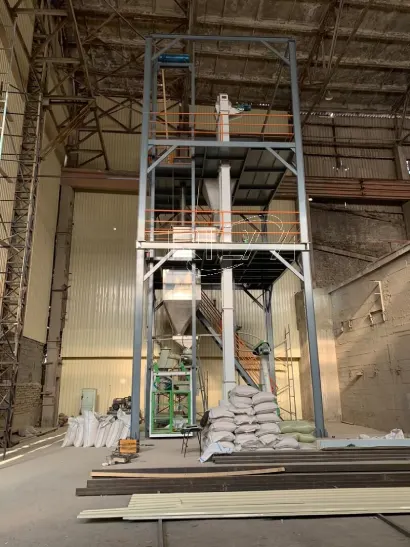
A logical workshop layout can make premix production easier to manage.
Raw materials should move through the facility in a clear direction, from receiving and storage toward weighing, mixing, finished-product storage, and packaging.
Where possible, clean and unclean areas should be separated. Dust-generating operations should also be managed appropriately.
The location of micro-ingredient storage deserves particular attention. Small quantities of expensive additives should be stored in a controlled environment where identification and inventory management are straightforward.
Packaging areas should be positioned so finished products can be transferred to storage without unnecessary handling.
How Should Micro-Ingredients Be Stored?
Many vitamins, minerals, and additives can be sensitive to moisture, heat, light, or prolonged storage.
Storage conditions should therefore follow the requirements of each ingredient.
Containers should be properly labeled, and stock rotation should be implemented to reduce the risk of expired materials.
Small ingredients can easily become difficult to manage if dozens of bags or containers are stored without a clear identification system.
A simple inventory system can record ingredient name, batch number, arrival date, expiry date, quantity, and storage location.
These procedures may seem basic, but they are particularly important when working with concentrated ingredients.
What Role Does Automation Play?
Automation can improve weighing accuracy and reduce repetitive manual operations.
A computerized batching system can store multiple formulas and control ingredient addition according to predefined quantities.
This is particularly useful when the facility produces many formulations. Operators can select the required formula while the system handles the weighing sequence.
However, automation does not eliminate the need for human supervision.
Scales still need calibration, sensors require maintenance, and operators need to verify that the correct ingredients are being used.
The most effective system combines automation with appropriate quality-control procedures.
How Can Production Accuracy Be Improved?
Accuracy begins with formula management.
Every ingredient should have a clear identification code, and the weighing system should be calibrated regularly.
For micro-ingredients, the accuracy of the smallest weighing range deserves particular attention. A scale that is suitable for large quantities may not provide sufficient precision for very small additions.
Ingredient handling procedures should also prevent accidental substitution.
Barcode systems, electronic batch records, and automated ingredient identification can further reduce human errors in larger facilities.
Regular sampling and laboratory testing can provide an additional layer of verification.
How Should Premix Quality Be Tested?
Quality control should cover raw materials, intermediate products, and finished premix.
Raw materials can be checked for identity, moisture, purity, and nutritional characteristics.
Finished premix may be tested for nutrient concentration and mixing uniformity. Depending on the product, microbial testing or other analyses may also be appropriate.
Sampling methods are important. A poorly collected sample may not accurately represent the entire batch.
For this reason, sampling procedures should be standardized and documented.
Retaining samples can also be useful when investigating later quality issues.
What Are the Most Common Production Problems?
Several problems can occur during premix production.
One common issue is segregation. Ingredients with significantly different particle sizes or densities may separate during transportation or storage.
Another issue is poor mixing uniformity, which can result from incorrect loading sequence, inappropriate mixer size, insufficient mixing, or unsuitable ingredient characteristics.
Moisture can also create problems. High moisture may cause caking and poor flowability, while extremely dry powders can generate excessive dust.
Equipment residues can create cross-contamination between batches.
Most of these problems can be reduced through better process design rather than simply increasing machine capacity.
How Can Premix Caking Be Prevented?
Powder caking can occur when moisture, pressure, particle characteristics, or storage conditions cause individual particles to stick together.
The risk depends on the formulation.
Moisture-sensitive ingredients should be stored under controlled conditions, while finished premix should be packaged in suitable moisture-resistant bags or containers when required.
Storage duration should also be controlled. Even a well-produced product can develop problems if it remains under unfavorable conditions for an extended period.
Good ventilation and appropriate warehouse management can help maintain product quality.
Is Packaging Important in Premix Production?
Packaging is not merely the final step of production. It also protects the premix from moisture, contamination, and handling damage.
Package size should correspond to how the product will be used. Smaller bags may be convenient for farms, while larger bags may be more appropriate for industrial customers.
Labels should clearly identify the product, batch information, production date, expiry date, and relevant handling instructions.
Accurate packaging weight is also important because the product is often used in precise formulation ratios.
How Should Equipment Be Maintained?
Routine maintenance is essential for keeping dosing and mixing equipment accurate.
Scales should be checked and calibrated regularly. Mixer paddles, ribbons, bearings, seals, and drive components should be inspected according to the manufacturer’s maintenance schedule.
Conveying systems should also be checked for buildup and wear.
Cleaning is particularly important in premix facilities because even a small amount of residual material can affect subsequent batches.
Maintenance records can help identify recurring problems and determine when components should be replaced before failure.
How Much Automation Does a Small Factory Need?
Not every premix facility requires a fully automated system.
For a small operation with only a few formulations, semi-automatic weighing and manual ingredient verification may be practical.
As production volume and formula variety increase, automatic batching becomes more valuable.
The decision should consider labor costs, formula complexity, production frequency, required accuracy, and future expansion.
A modular design can allow automation to be introduced gradually rather than requiring every feature at the beginning.
How Should a New Premix Project Be Planned?
Before purchasing equipment, project developers should prepare a basic process description.
The following questions can provide a useful starting point:
- What animal species will the premix serve?
- How many formulations will be produced?
- What is the smallest ingredient inclusion rate?
- What batch size is required?
- What is the expected daily output?
- What raw materials are available locally?
- How sensitive are the ingredients to moisture and heat?
- What level of automation is appropriate?
- How will cleaning be performed?
- How much future expansion is expected?
Once these questions are answered, the equipment configuration becomes much easier to define.
A good project design should also include storage capacity, electrical requirements, ventilation, dust control, packaging, laboratory space, and worker safety.
What Should Be Considered When Choosing Equipment?
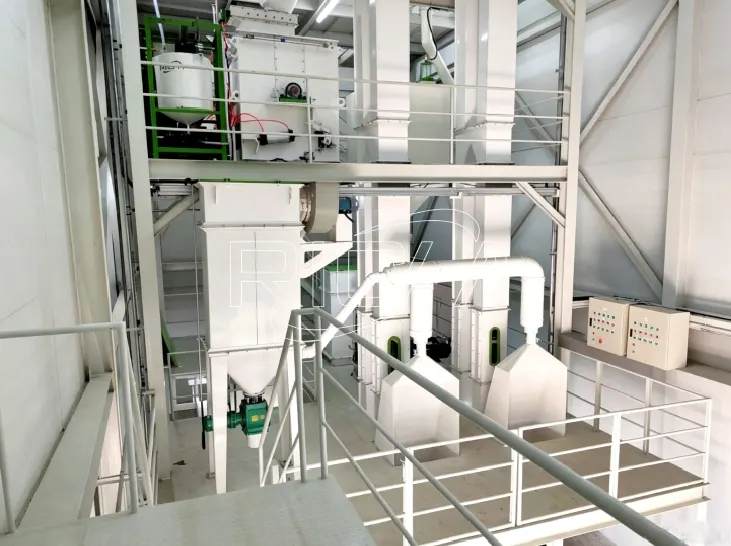
Equipment should be evaluated according to the specific characteristics of the premix being produced.
Important technical factors include weighing accuracy, mixer working range, mixing uniformity, material compatibility, cleaning accessibility, automation level, and spare-parts availability.
It is also useful to examine the complete process instead of evaluating each machine independently.
For example, a highly accurate weighing system will not deliver the expected results if the mixer cannot achieve sufficient uniformity. Likewise, an excellent mixer cannot compensate for incorrect ingredient identification.
The system should therefore be considered as a connected production process.
What Technical Information Should Suppliers Provide?
When discussing a new project with equipment suppliers, buyers can request detailed information about machine capacity, power consumption, dimensions, materials of construction, weighing accuracy, mixing performance, installation requirements, and maintenance procedures.
A supplier should also be able to explain the proposed process flow.
Technical documentation is particularly useful because it allows buyers to compare different configurations using measurable criteria rather than relying only on general descriptions.
For those researching feed-processing equipment and production technologies, read full article can be used as a natural starting point for exploring related technical topics and process considerations.
Can a Premix Plant Be Expanded Later?
A well-planned premix facility can often be expanded as production requirements increase.
Additional storage bins, weighing units, mixers, packaging machines, or automated control systems can be introduced when necessary.
However, expansion is easier when the original workshop has sufficient space and utility capacity.
Electrical supply, compressed air, ventilation, material flow, and equipment foundations should therefore be considered during the initial design.
Planning for future growth does not necessarily mean purchasing all equipment immediately. It means creating a layout that leaves practical options for later development.
What Role Does Technical Experience Play?
Premix processing looks relatively simple because the quantities of material are small, but achieving consistent results can require considerable process control.
Different ingredients behave differently during storage, weighing, mixing, and transportation. Some powders flow easily, while others tend to bridge, cake, or generate dust.
Practical experience can therefore help operators identify problems before they become significant production issues.
Equipment manufacturers with experience in feed-processing projects may also contribute process-design knowledge. For example, pellet plant works with different types of feed processing equipment and can provide technical perspectives on equipment configuration and production-line planning.
The most useful technical support is generally based on actual formulations, target capacities, raw material characteristics, and workshop conditions.
Final Thoughts
Premix production is a specialized part of the feed industry that requires particular attention to accuracy and uniformity. Although the quantities of vitamins, minerals, amino acids, and other additives may be small, their influence on the final feed can be significant.
A practical production system should therefore begin with nutritional requirements and formulation design rather than with machinery selection alone.
From raw material storage and precision weighing to premixing, main mixing, packaging, and quality testing, each stage contributes to the consistency of the final product.
Small facilities can begin with relatively simple equipment, while larger operations may benefit from automatic batching, computerized formula management, advanced weighing systems, and integrated quality-control procedures.
Ultimately, the goal is not simply to build a high-capacity facility. It is to create a production process that can repeatedly deliver accurate, uniform, and stable premix products under real operating conditions.