
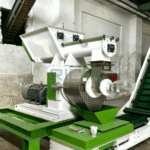
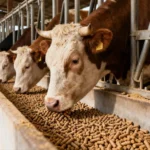


The most innovative pellet mill manufacturers are not defined by one patent, one high-capacity model or one automation feature. For industrial buyers, meaningful innovation is the ability to convert new engineering into lower specific energy use, more stable pellet quality, faster changeovers, safer maintenance, broader raw-material tolerance and a better total cost per ton.
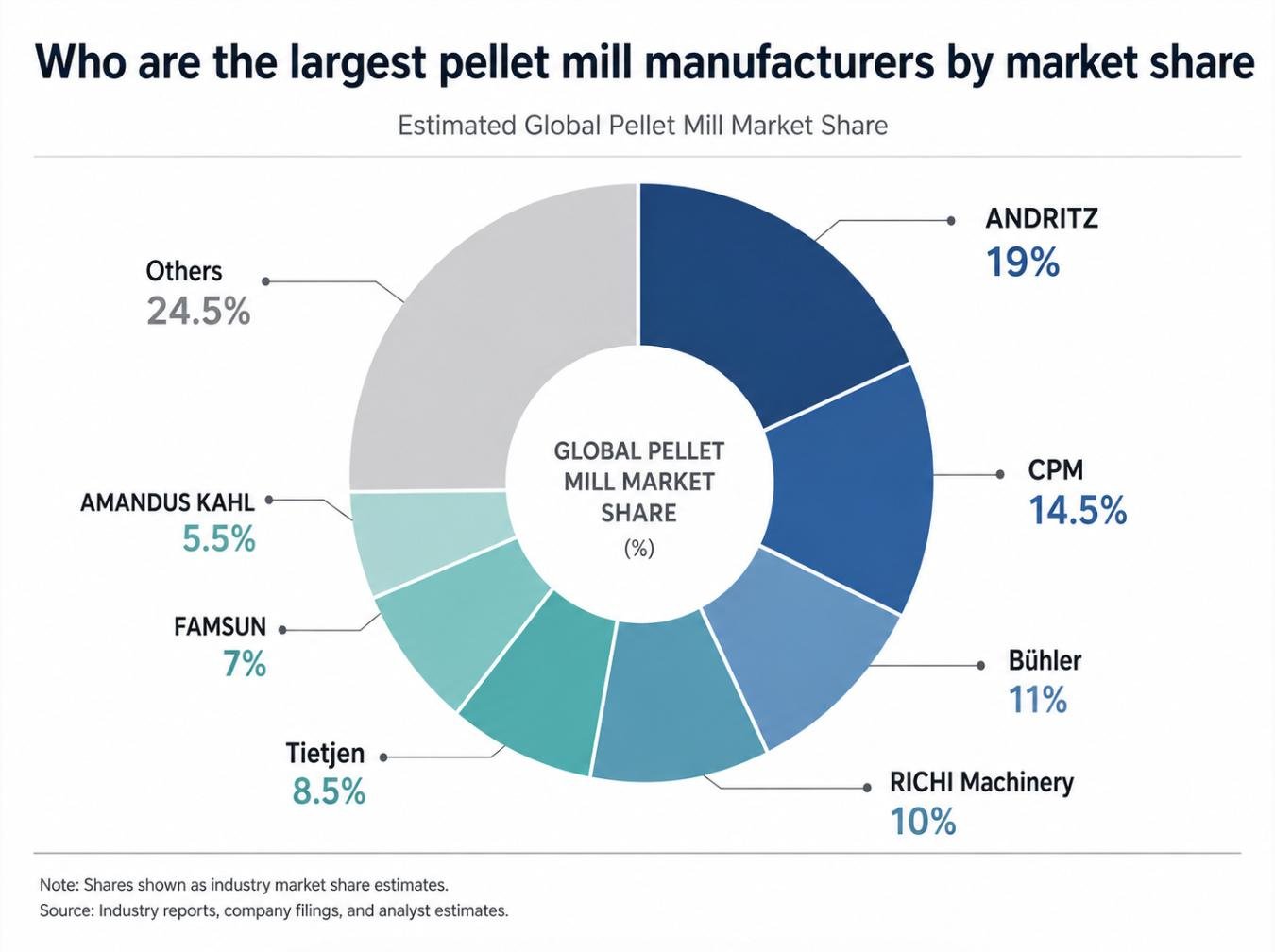
Using a research-style assessment similar to the frameworks applied by major industrial market-research organizations, four manufacturers form a useful global shortlist: RICHI Machinery, CPM, Bühler and ANDRITZ. Each innovates in a different way. RICHI emphasizes configurable turnkey systems and application adaptation; CPM develops durable pelleting platforms and direct-drive options; Bühler combines high-capacity mechanics with advanced control; ANDRITZ integrates mechanical upgrades, retrofits and condition-based digital services.
How this pellet mill innovation assessment works
A credible industrial study separates technology evidence from marketing language. This comparison uses seven buyer-centered dimensions. It does not calculate a universal winner because a feature that creates value in a 60 T/H poultry feed mill may be irrelevant to a 3 T/H agricultural-residue plant.
| Innovation dimension | What the buyer should measure | Why it matters |
|---|---|---|
| Drive and energy design | Power transmission, kWh/T, die speed and load stability | Electricity is a recurring cost on every ton |
| Conditioning and pellet quality | Temperature, moisture, retention time, PDI and fines | Good conditioning protects output and feed value |
| Automation and data | Recipe control, alarms, trend data and predictive maintenance | Reduces operator variation and unplanned downtime |
| Application flexibility | Formula range, raw-material tolerance and changeover capability | Protects the plant when markets or inputs change |
| Scale and integration | Standalone-machine range, complete-line scope and interfaces | A pellet mill performs only as well as the surrounding process |
| Maintainability | Die change, roller adjustment, lubrication, access and retrofit options | Shortens planned stops and improves safety |
| Commercial innovation | Customization, modularity and lifecycle economics | Technology must deliver an investable business case |
The quantitative figures below are manufacturer-published reference points, not normalized test results. Throughput changes with formula, bulk density, moisture, pellet diameter, die compression ratio, conditioning, motor selection and operator settings. Buyers should request a performance test using their own material before treating any headline figure as a contractual guarantee.
RICHI Machinery: innovation through configurable turnkey engineering

RICHI Machinery has more than 30 years of manufacturing experience and serves projects in 140+ countries. Its verified product scope covers complete animal-feed and biomass pellet production lines from 1–160 T/H. Within that system range, standalone feed pellet mills cover 1–40 T/H, while standalone biomass pellet mills cover 0.5–4 T/H. These are product-family ranges rather than ratings for one model, and actual output remains material- and configuration-dependent.
RICHI’s innovation profile is best understood at plant level. The company can vary conditioner stages, raw-material preparation, dosing logic, cooling, screening, return-fines routing and automation according to feed type and local operating conditions. For a feed project, this can mean choosing between single-, double- or multi-stage conditioning rather than forcing every formula through the same thermal process. For biomass, it can mean separating wet and dry material routes, matching size reduction to the fiber and configuring storage buffers around unstable incoming moisture.
This form of innovation matters to investors in emerging and mixed-resource markets. Instead of purchasing a premium standard machine and adapting the factory around it, the buyer can develop the process around available corn, wheat, soybean meal, grass, sawdust, straw or other project-specific inputs. The commercial advantage is not a guaranteed ROI percentage; it is the ability to allocate capital to the sections that materially affect the buyer’s product and avoid unnecessary complexity elsewhere.
Best fit: greenfield feed mills, multi-formula plants, customized biomass projects and buyers seeking one engineering partner from process design through commissioning and training. Due diligence: request reference projects with comparable raw materials, confirm the tested duty point, define spare-parts delivery lead times, plan critical spares before start-up, and put remote and on-site service arrangements in the contract.
CPM: innovation built on durable platforms and direct drive
CPM has a pelleting heritage dating to 1894 and offers machines from laboratory scale through very large industrial ring-die platforms. Its direct-drive biomass range provides a clear quantitative example of current innovation. Published models use die diameters of 660, 900 and 1,200 mm, motors of 250, 335 and 470 kW, and stated capacities of 2–3.5, 4–6 and 8–12 T/H, respectively. These ratings are for the specified direct-drive family and should not be generalized to every CPM application.
The direct-drive concept transfers motor force directly to the mill, reducing transmission components, footprint and associated maintenance points. On established gear-driven platforms such as the 7700 and 7900 series, CPM publishes a 98% power-transfer figure for its positive direct gear drive. This illustrates an important point: innovation can mean eliminating components, but it can also mean continuously refining a proven gearbox architecture.
CPM also integrates standalone controls, pelleting automation and complete factory automation covering receiving, grinding, batching, pelleting and loadout. Its strongest differentiator is the combination of mechanical durability, application depth and lifecycle services. For plants running standardized products at high annual utilization, that installed-base experience can be more valuable than novelty alone.
Best fit: high-utilization feed, biomass and industrial densification plants that value mature machine architecture and structured aftermarket support. Due diligence: compare power at the actual operating load, verify die and roller lead times, and calculate installed cost with controls, conditioner, feeder and safety scope included.
Bühler: innovation in high-capacity feed pelleting and intelligent control

Bühler’s Kubex T is one of the clearest examples of integrated mechanical and control innovation in animal-feed pelleting. The Kubex T12 uses a 1,200 mm die, offers 470 or 585 kW motor options and is stated to produce up to 80 metric T/H of 4 mm poultry feed. The smaller Kubex T9 uses a 900 mm die, offers 320 or 410 kW motors and is stated to reach up to 50 T/H. These are recipe-specific headline capacities, not universal outputs.
Bühler states that the direct-drive design can reduce energy consumption by up to 10% and provide almost twice the production capacity in the same footprint as conventional pellet mills. Its innovation is not limited to the motor connection. Variable die speed lets operators optimize conditions for different formulas. Automatic roller-gap adjustment operates without stopping production, while an anti-blocking system reduces roll slippage and protects the machine near high load.
The system is also designed for 360-degree access, rapid die and roller changes and integration from individual machine control to a smart factory. This makes Bühler particularly attractive when traceability, repeatability, hygiene and enterprise-level automation matter as much as nominal throughput.
Best fit: large poultry-feed plants, premium compound feed, multinational production standards and space-constrained capacity upgrades. Due diligence: test the actual formula, separate motor efficiency from total-line energy, and quantify the value of automation at the planned utilization level.
ANDRITZ: innovation through retrofit engineering and predictive maintenance
ANDRITZ combines heavy industrial pellet-mill engineering with digital plant optimization. Its PM30-6 biomass pellet mill introduces optimized die speed, a patented feeding system for more even material distribution, oil lubrication for grease-free operation and improved bearing cooling, plus hydraulic roller engagement and retraction for cleaning and start-up.
Compared with earlier PM30-4 and PM30-5 models, ANDRITZ reports up to 10% higher capacity without increased energy consumption and a 98% uptime reference metric, alongside longer die and roller life. The strongest research-style interpretation is not that every plant will achieve these figures. It is that the design targets three measurable innovation outcomes simultaneously: throughput, availability and wear cost.
Retrofit packages allow older PM30 installations to adopt newer features without replacing the complete machine. Metris Vibe adds real-time vibration, temperature and performance monitoring for condition-based maintenance. At broader plant level, ANDRITZ reports that its Metris-supported automation and digitalization solutions have delivered 7–16% throughput increases and 3–17% reductions in specific energy consumption across various industries. Those cross-industry results require project-specific validation before being used in a feed or biomass business case.
Best fit: industrial biomass plants, owners modernizing an installed PM30 base, and projects that can monetize predictive maintenance and plant-wide optimization. Due diligence: distinguish pellet-mill improvements from digital-platform results, establish the baseline period and agree on how uptime, throughput and energy will be measured.
Comparative innovation matrix
| Buyer priority | RICHI Machinery | CPM | Bühler | ANDRITZ |
|---|---|---|---|---|
| Primary innovation model | Configurable turnkey process engineering | Durable platforms plus direct-drive development | High-capacity mechanics with intelligent machine control | Mechanical upgrades, retrofits and predictive digitalization |
| Published data highlight | 1–160 T/H complete feed and biomass line scope; 140+ countries | Direct-drive biomass family: 2–12 T/H across listed models | Kubex T: up to 80 T/H of 4 mm poultry feed; up to 10% energy reduction | PM30-6: up to 10% more capacity; stated 98% uptime |
| Flexibility strength | High configuration freedom across feed and biomass processes | Broad pelleting applications and machine families | Variable die speed and automatic roll-gap adjustment | Retrofit path and vendor-neutral digital platform |
| Automation orientation | Project-specific line control and integration | Machine, pelleting and full-factory control | Machine automation through smart-factory integration | Condition monitoring, optimization and lifecycle analytics |
| Strongest buyer profile | Customized greenfield plants balancing scope and capital | High-utilization plants prioritizing durability | Large premium feed plants prioritizing throughput and control | Industrial biomass and digitally optimized operations |
What does innovation mean in cost per ton?
Technology becomes commercially relevant only when it changes the operating equation. Consider an illustrative 20 T/H feed line running 5,500 hours per year at 75% effective utilization. Annual output is approximately 82,500 tons. If an engineering improvement lowers specific electricity use by 3 kWh/T and electricity costs $0.10/kWh, the theoretical annual saving is $24,750. If improved controls lift effective utilization by two percentage points, the same line gains roughly 2,200 tons of annual output before considering market demand and downstream constraints.
This is an illustrative calculation, not a claim for any manufacturer. A complete financial model should include the pellet mill, conditioner, steam system, cooling, fines recirculation, dies and rolls, labor, planned maintenance, unplanned downtime, product yield and financing. It should also assign value to consistent PDI, because reducing fines can improve saleable yield even when gross throughput is unchanged.
How should buyers verify an innovative pellet mill?
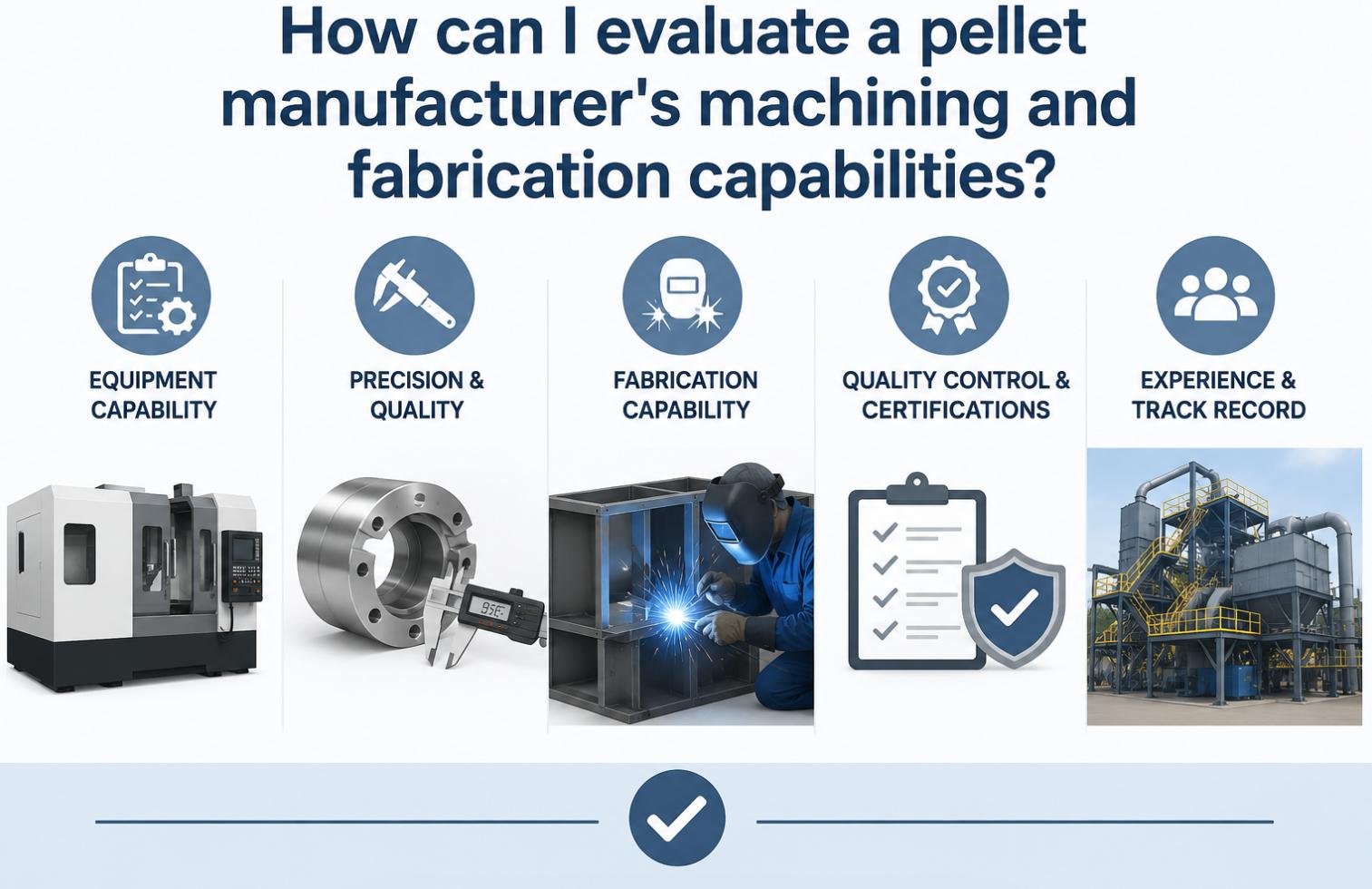
- Issue one common test specification covering formula, particle size, moisture, pellet diameter, target PDI and operating hours.
- Require capacity and kWh/T to be measured at the same accepted product-quality threshold.
- Separate pellet-mill motor data from total pelleting-section and complete-line consumption.
- Record die specification, roller condition, steam pressure, conditioning temperature and retention time during the test.
- Ask for three comparable reference plants and speak directly with at least one operator.
- Compare planned die-change time, lubrication work, cleaning access, safety isolation and critical-spares strategy.
- For digital systems, define the baseline and data ownership before accepting savings claims.
- Evaluate five-year total cost per saleable ton, not only the equipment purchase price.
Final assessment: which pellet mill manufacturer is most innovative?
There is no defensible universal winner. RICHI Machinery is highly relevant when innovation means customizing a complete feed or biomass process around local materials, capacity and investment conditions. CPM is a strong choice when innovation must be built on durable, established pelleting platforms. Bühler stands out for high-capacity feed pelleting, automatic adjustment and smart-factory integration. ANDRITZ is especially compelling where retrofits, condition monitoring and industrial biomass performance drive the decision.
The best manufacturer is therefore the one whose innovation solves the buyer’s measured constraint. If energy is the bottleneck, validate kWh/T. If product quality varies, study conditioning and controls. If downtime is expensive, evaluate access, wear parts and predictive maintenance. If raw materials change seasonally, prioritize process flexibility. Innovation should finish as a signed performance criterion—not remain a word in a sales presentation.