



For many years, expansion was considered the primary path to growth in the biomass industry. When demand increased, companies often responded by purchasing larger equipment, adding production lines, or building bigger factories. While capacity remains important, today’s most successful biomass producers are discovering that profitability depends just as much on planning as it does on production volume.
A well-designed facility with optimized workflows, reliable raw material sourcing, and efficient equipment utilization can often outperform a larger operation burdened by unnecessary costs and operational inefficiencies.
As biomass markets mature and competition intensifies, manufacturers are increasingly shifting their focus toward smarter plant design, process optimization, and long-term operational sustainability.
The Changing Economics of Biomass Production
Biomass pellet manufacturing is no longer viewed solely as a way to process waste materials. It has evolved into a sophisticated industry that combines energy production, environmental management, logistics, and advanced manufacturing technologies.
Several economic factors are influencing investment decisions today:
- Increasing transportation costs
- Higher labor expenses
- Fluctuating raw material prices
- Growing quality requirements
- Expanding renewable energy markets
These factors make efficiency more important than ever.
Instead of simply producing more pellets, manufacturers are seeking ways to lower production costs per ton while maintaining consistent product quality.
The companies that achieve this balance often gain a significant competitive advantage.
(Related Post: https://www.richipelletmill.com/vertical-ring-die-pellet-mill/ )
Why Raw Material Strategy Matters More Than Capacity
Many investors spend considerable time comparing pellet mill specifications but devote relatively little attention to feedstock planning.
In reality, raw materials often determine whether a project succeeds or struggles.
Reliable access to biomass resources directly affects:
- Production continuity
- Manufacturing costs
- Pellet quality
- Supply chain stability
- Long-term profitability
A plant operating at 80% capacity with a stable feedstock supply may generate stronger financial results than a larger facility facing frequent material shortages.
Successful producers typically evaluate:
Availability
Can sufficient biomass be sourced year-round?
Transportation Distance
Will logistics costs remain competitive?
Material Consistency
Can feedstock quality be maintained throughout the year?
Alternative Sources
What options exist if primary materials become unavailable?
These questions often have a greater impact on project success than equipment capacity alone.
Designing Facilities for Operational Efficiency
Modern pellet plants are increasingly designed around workflow efficiency rather than simply fitting equipment into available space.
An optimized layout can improve:
- Material handling
- Labor productivity
- Equipment accessibility
- Maintenance efficiency
- Safety performance
Each production stage should support the next with minimal interruptions.
Typical workflow considerations include:
Raw Material Reception
Efficient unloading and storage systems reduce handling costs.
Size Reduction
Uniform particle size improves pelletizing performance.
Drying
Consistent moisture control contributes to product quality.
Pelletizing
Stable operating conditions maximize throughput.
Cooling and Packaging
Proper finishing processes protect pellet integrity.
When these stages are carefully integrated, overall plant efficiency can improve significantly.
Why Vertical Pellet Mills Continue to Attract Interest
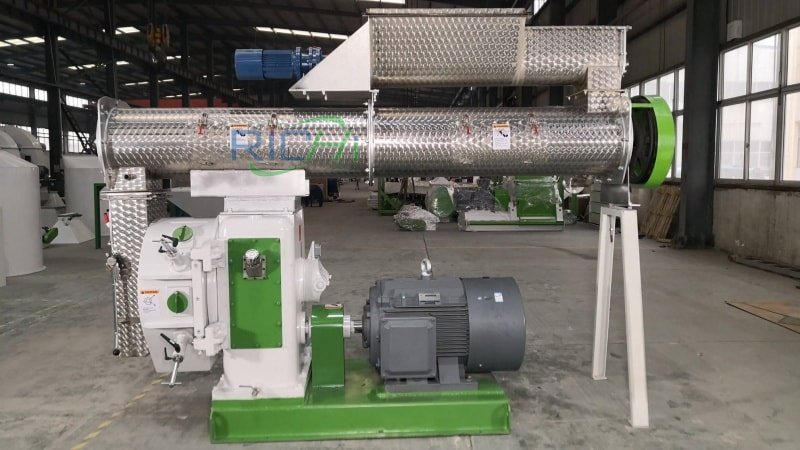
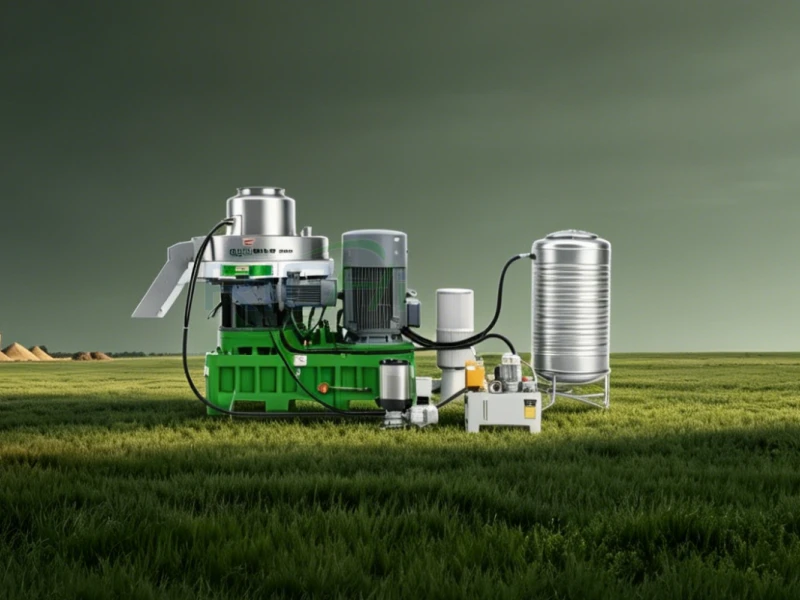
Among the various pelletizing technologies available, the industrial vertical pellet machine has become an increasingly popular option for biomass manufacturers.
Its growing adoption reflects the industry’s desire for equipment capable of processing diverse raw materials while maintaining stable production performance.
Many operators appreciate the flexibility offered by vertical pelletizing systems, particularly when working with:
- Wood residues
- Agricultural waste
- Forestry by-products
- Mixed biomass feedstocks
As raw material diversity becomes more important, equipment adaptability is emerging as a key investment consideration.
Rather than designing facilities around a single feedstock, many businesses now seek solutions capable of accommodating changing material availability over time.
The Advantages of Scalable Production Models
Not every pellet project needs to begin with a large industrial facility.
In fact, many successful businesses start with moderate production capacities and expand as market demand develops.
A properly engineered 0.5-20 T/H wood pellet plant solution offers scalability that allows investors to align production capacity with actual market opportunities.
Benefits of scalable development include:
- Reduced initial investment risk
- Faster project implementation
- Easier operational management
- Greater financial flexibility
- More controlled expansion
This approach can help businesses grow sustainably while minimizing exposure to market uncertainties.
How Automation Is Reshaping Manufacturing Operations
Automation has become one of the most influential trends in industrial production.
Biomass pellet manufacturing is no exception.
Modern control systems provide operators with access to real-time production data, allowing them to make informed decisions quickly.
Common monitoring functions include:
- Equipment status tracking
- Energy consumption analysis
- Temperature monitoring
- Production reporting
- Maintenance alerts
These capabilities help identify potential issues before they become costly problems.
Automated systems can also improve consistency by reducing dependence on manual adjustments and operator experience.
As technologies continue to evolve, digital integration is expected to become a standard feature of future pellet plants.
Understanding the Importance of Product Quality
Many new producers focus heavily on production volume while underestimating the value of consistent quality.
However, customers often prioritize reliability over quantity.
High-quality pellets generally offer:
- Consistent density
- Stable combustion performance
- Lower fines content
- Improved durability
- Better storage characteristics
Maintaining these standards requires attention throughout the entire manufacturing process.
Factors such as raw material preparation, moisture management, pelletizing conditions, and cooling performance all contribute to final product quality.
Companies that establish strong quality control procedures often enjoy higher customer retention and stronger market reputations.
Building Resilience Through Diversification
Market conditions can change rapidly.
Demand fluctuations, feedstock shortages, and policy changes all have the potential to impact profitability.
To reduce risk, many manufacturers are diversifying both raw material sources and product offerings.
Examples include:
Multiple Feedstocks
Using wood waste, straw, and agricultural residues.
Diverse Customer Segments
Supplying industrial, commercial, and residential markets.
Value-Added Products
Producing specialty pellets for niche applications.
Diversification can help stabilize revenue streams and improve long-term business resilience.
Why Experience Still Matters in Equipment Selection
Advanced machinery is important, but successful projects often depend equally on the expertise behind the equipment.
Investors increasingly seek suppliers that provide comprehensive support throughout the project lifecycle.
Valuable services often include:
- Feasibility analysis
- Plant design
- Equipment integration
- Installation guidance
- Technical training
- Ongoing support
Companies such as Richi Machinery manufacture have participated in a wide range of biomass projects, helping producers address operational challenges and optimize production processes.
Access to technical expertise can significantly reduce learning curves and accelerate project success.
The Growing Role of Sustainability in Business Strategy
Environmental considerations are becoming increasingly important across global industries.
Biomass pellet production aligns with several sustainability objectives, including:
- Renewable energy development
- Resource utilization
- Waste reduction
- Carbon emission mitigation
These benefits are attracting support from governments, investors, and consumers alike.
As sustainability continues to influence purchasing and investment decisions, biomass producers may find additional opportunities to strengthen their market position.
Looking Ahead: The Next Stage of Industry Development
The future of biomass manufacturing is likely to be defined by flexibility, efficiency, and technological innovation.
Successful producers will increasingly focus on:
- Data-driven decision making
- Automation adoption
- Feedstock diversification
- Product quality enhancement
- Operational optimization
Rather than pursuing growth through capacity expansion alone, companies are learning that sustainable success often comes from improving the efficiency and resilience of existing operations.
Conclusion
The most profitable biomass pellet plants are not always the largest. More often, they are the facilities that combine careful planning, efficient operations, reliable raw material management, and adaptable production systems.
As renewable energy markets continue to evolve, businesses that invest in flexibility and long-term strategy will be better positioned to capture future opportunities. If you’re evaluating pellet manufacturing technologies or exploring ways to improve production performance, about this topic can provide valuable insight into the factors shaping the next generation of biomass processing projects.