




Rabbit farming has become a highly organized branch of modern livestock production. As farms scale up to meet increasing demand for rabbit meat, laboratory animals, and specialty livestock products, feed manufacturing efficiency has become a critical factor determining profitability. Among all feed types, rabbit feed requires special attention because rabbits have sensitive digestive systems and depend heavily on fiber-rich, uniform, and well-balanced pellet feed.
Improving efficiency in rabbit feed pellet making is not just about producing more feed in less time. It involves optimizing raw material handling, reducing energy consumption, improving pellet quality, minimizing waste, and ensuring consistent output. At the center of this process is the rabbit feed pellet machine, which plays a decisive role in shaping final product quality and production efficiency.
This article explains in detail how to improve efficiency in rabbit feed pellet making, covering equipment selection, production line optimization, raw material management, machine operation techniques, and advanced automation strategies.
1. Understanding Efficiency in Rabbit Feed Pellet Production
Efficiency in rabbit feed pellet production can be defined in several ways:
- Production output per hour
- Energy consumption per ton of feed
- Labor utilization rate
- Pellet quality consistency
- Raw material utilization rate
- Equipment downtime reduction
A highly efficient system produces more high-quality pellets using fewer resources and less energy.
To achieve this, all components of the production system must work together smoothly, especially the rabbit feed pellet machine, which is the core of pellet formation.
https://pelletisingmachine.com/animal-feed-machine
2. Importance of the Rabbit Feed Pellet Machine in Efficiency
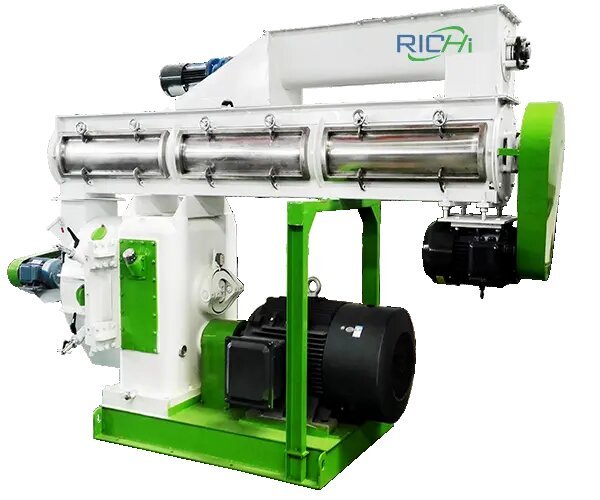
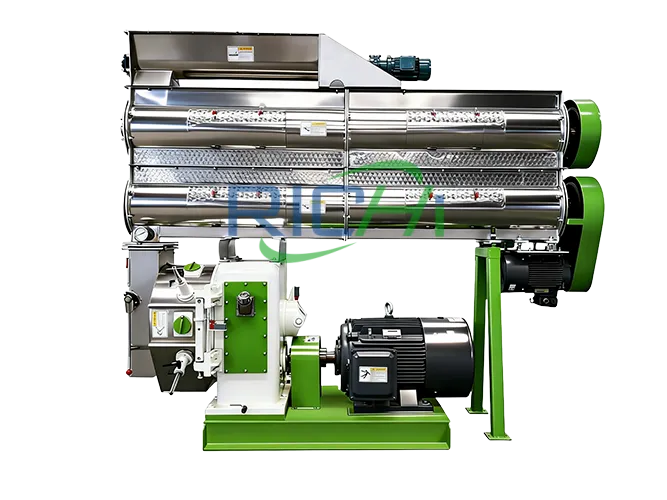
The rabbit feed pellet machine is the central equipment in the production process. It determines:
- Pellet density
- Pellet size
- Production speed
- Energy consumption
- Feed digestibility
How the machine works:
- Mixed feed enters the conditioning chamber
- Rollers compress material through a die
- High pressure forms pellets
- Cutting blades adjust pellet length
- Finished pellets are discharged
Why it affects efficiency:
- Poor machine settings reduce output
- Worn parts increase energy consumption
- Incorrect moisture levels reduce throughput
- Improper die selection leads to blockages
Therefore, improving efficiency begins with optimizing the rabbit feed pellet machine.
3. Optimize Raw Material Selection
Raw materials directly affect pelletizing efficiency.
Common ingredients include:
- Alfalfa meal
- Corn
- Wheat bran
- Soybean meal
- Grass powder
- Vitamin premixes
Efficiency improvements:
- Use uniform particle materials
- Maintain consistent moisture content
- Avoid contaminated or oversized materials
- Pre-screen raw materials before grinding
Good raw material quality reduces load on the rabbit feed pellet machine and improves production speed.
4. Improve Grinding Efficiency
Grinding is one of the most energy-consuming stages.
Best practices:
- Use high-efficiency hammer mills
- Replace worn hammers regularly
- Control particle size between 1–3 mm
- Avoid over-grinding
Benefits:
- Faster pellet formation
- Reduced energy consumption
- Improved mixing uniformity
Fine and consistent particle size improves the performance of the rabbit feed pellet machine.
5. Optimize Mixing Process
A poor mixing process reduces pellet quality and machine efficiency.
Key improvements:
- Use horizontal ribbon mixers for uniform blending
- Maintain correct mixing time (not too long, not too short)
- Ensure accurate ingredient weighing
- Add liquid ingredients evenly
Benefits:
- Uniform feed composition
- Better pellet quality
- Reduced machine strain
Proper mixing ensures the rabbit feed pellet machine operates smoothly without inconsistencies.
6. Control Moisture Before Pelletizing
Moisture content is one of the most important factors in pellet efficiency.
Ideal moisture range:
- 10%–15% before pelletizing
Problems caused by improper moisture:
- Too dry → low output, high wear
- Too wet → clogging, low pellet hardness
Solutions:
- Use steam conditioners
- Install moisture sensors
- Adjust water or steam input in real time
Proper moisture control significantly improves rabbit feed pellet machine efficiency.
7. Optimize the Rabbit Feed Pellet Machine Settings
To improve efficiency, operators must properly adjust machine parameters.
Key adjustments:
- Die compression ratio
- Roller pressure
- Feeding speed
- Cutting blade position
- Temperature control
Efficiency tips:
- Match die size to feed formula
- Avoid overloading the machine
- Regularly clean die holes
- Replace worn rollers
Proper settings ensure maximum output with minimum energy use.
8. Improve Die and Roller Maintenance
The die and rollers are the most critical wear parts of the rabbit feed pellet machine.
Maintenance practices:
- Clean die holes regularly
- Replace worn rollers
- Lubricate bearings properly
- Inspect for cracks or deformation
Benefits:
- Stable pellet output
- Reduced downtime
- Lower energy consumption
- Improved pellet quality
Neglecting maintenance is one of the main causes of efficiency loss.
9. Improve Cooling and Drying Efficiency
After pelletizing, pellets must be cooled and dried efficiently.
Cooling improvements:
- Use counterflow coolers
- Ensure proper airflow distribution
- Avoid overcooling or undercooling
Drying improvements:
- Control temperature precisely
- Maintain uniform airflow
- Prevent pellet cracking
Efficient post-processing reduces waste and improves overall production speed.
10. Reduce Material Waste
Material waste directly reduces efficiency.
Common sources of waste:
- Dust during grinding
- Broken pellets
- Spillage during transport
- Over-processing
Solutions:
- Install dust collection systems
- Optimize conveyor systems
- Improve pellet machine cutting accuracy
- Recycle broken pellets back into production
Reducing waste improves both cost efficiency and output.
11. Use Automation and PLC Control Systems
Automation significantly improves efficiency in modern production lines.
Features of PLC systems:
- Automatic feed control
- Real-time monitoring
- Temperature and pressure regulation
- Alarm systems for faults
Benefits:
- Reduced labor costs
- Higher production stability
- Faster response to issues
- Better coordination of machines
Automation ensures the rabbit feed pellet machine operates at optimal performance.
12. Optimize Production Line Layout
A poorly designed layout reduces efficiency.
Best layout practices:
- Short material transport distance
- Logical machine arrangement
- Smooth material flow
- Minimized manual handling
Benefits:
- Reduced energy loss
- Faster production cycle
- Lower labor requirements
A well-designed livestock feed production system enhances overall efficiency.
13. Energy Efficiency Improvements
Energy consumption is a major cost factor.
Energy-saving strategies:
- Use high-efficiency motors
- Maintain proper lubrication
- Reduce machine idle time
- Optimize load distribution
Efficient use of energy improves profitability.
14. Improve Operator Training
Human operation plays a key role in efficiency.
Training focus:
- Machine operation skills
- Maintenance knowledge
- Safety procedures
- Troubleshooting skills
Well-trained operators ensure the rabbit feed pellet machine performs at maximum efficiency.
15. Implement Preventive Maintenance
Preventive maintenance avoids unexpected breakdowns.
Maintenance schedule:
- Daily cleaning
- Weekly inspection
- Monthly lubrication
- Quarterly replacement of wear parts
Benefits:
- Reduced downtime
- Longer machine lifespan
- Stable production output
16. Improve Raw Material Pre-Treatment
Pre-treatment enhances pelletizing efficiency.
Methods include:
- Pre-drying
- Crushing large particles
- Removing impurities
Better pre-treatment reduces load on the rabbit feed pellet machine.
17. Recycling and Reprocessing System
Efficient plants reuse waste materials.
Recycled materials:
- Broken pellets
- Dust particles
- Oversized particles
Recycling improves material utilization and reduces waste.
18. Integrating a Complete Livestock Feed Production System
Efficiency is highest when the rabbit feed pellet machine is part of a complete livestock feed production system.
A full system includes:
- Grinding
- Mixing
- Pelletizing
- Cooling
- Screening
- Packaging
Integration ensures:
- Continuous production
- Minimal downtime
- Stable quality
- Lower labor cost
19. Monitoring and Data Analysis
Advanced systems use data to improve efficiency.
Data collected includes:
- Production speed
- Energy consumption
- Machine load
- Raw material usage
Benefits:
- Identify inefficiencies
- Optimize settings
- Predict maintenance needs
20. Common Mistakes That Reduce Efficiency
Many factories lose efficiency due to:
- Poor raw material quality
- Incorrect machine settings
- Lack of maintenance
- Overloading machines
- Inadequate training
Avoiding these mistakes significantly improves performance.
Conclusion
Improving efficiency in rabbit feed pellet making requires a comprehensive approach involving raw material management, process optimization, equipment maintenance, automation, and operator training.
At the center of the entire system is the rabbit feed pellet machine, which directly determines production speed, pellet quality, and energy consumption. When properly optimized and integrated into a well-designed livestock feed production system, it can significantly increase output while reducing costs.
Ultimately, efficiency improvement is not about a single machine or adjustment—it is about creating a coordinated, intelligent, and well-maintained production system that ensures stable, high-quality, and cost-effective rabbit feed production.