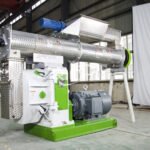



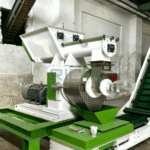

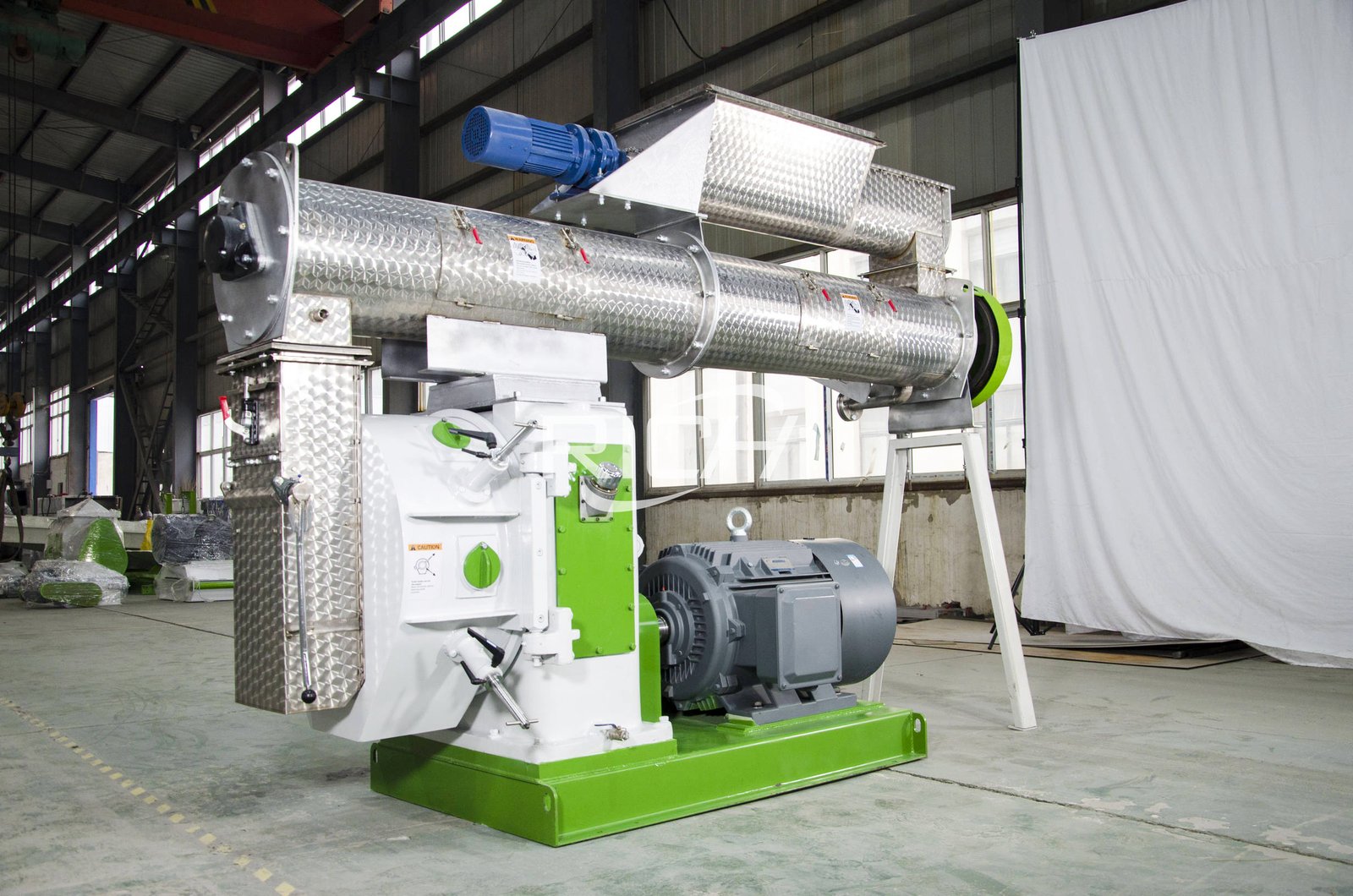
A feed pellet line can be mechanically complete and still fail to reach stable commercial output if commissioning is treated as a short startup event rather than a controlled production handover. The pellet machine sits at the center of a process that depends on raw-material preparation, feeding stability, conditioning, utilities, cooling, screening, controls, and operator response. If any of those interfaces are not ready, the machine may run, but the plant will not yet be production-ready.
For buyers evaluating a feed pellet machine, commissioning should therefore be planned as a sequence of measurable checks. The objective is not simply to produce the first pellets. It is to prove that the equipment can repeatedly operate within an acceptable window for throughput, pellet quality, motor load, temperature, and operator control.
Define the Commissioning Boundary Before Equipment Arrives
The first decision is to define where the supplier’s responsibility begins and ends. In some projects, the pelletizer is only one machine in a line assembled from several suppliers. In others, one supplier provides the complete grinding, mixing, pelletizing, cooling, screening, and conveying system. The commissioning plan must identify which interfaces will be tested together and which conditions the owner must provide before the supplier starts work.
Typical owner-side readiness items include electrical power, compressed air, steam where conditioning is used, finished foundations, installed conveyors, sufficient raw material, packaging or storage capacity, and assigned operators. If one of these elements is missing, commissioning time is consumed by site completion rather than equipment validation.
Verify Utilities Under Load, Not Only at No-Load
A motor that rotates correctly during a dry test does not prove that the electrical system is ready for full production. Commissioning should confirm voltage stability, motor current, overload protection, cable temperature where relevant, panel ventilation, and the behavior of the line when several major motors operate together.
Steam and compressed air also need to be checked at actual demand. If steam pressure drops sharply when conditioning starts, feed temperature and moisture will become unstable. If compressed air pressure falls during repeated actuator operation, gates and diverters may respond slowly or incompletely. These conditions can look like machine faults even when the root cause is utility supply.
Establish a Known Raw-Material Baseline
The first production test should use raw material that is representative of the future formula. Particle size distribution, moisture, fiber content, oil level, mineral content, and bulk density all affect pelletizing behavior. A commissioning result based on an unusually easy formula can give the wrong impression of normal plant performance.
Before the material reaches the pelletizer, the team should confirm that grinding and mixing have already produced a stable feed stream. If feed fluctuates in particle size or moisture, pellet mill current and pellet quality will fluctuate as well. Commissioning data is only useful when the input conditions are recorded.
Start With Feeding Stability Before Chasing Capacity
The first loaded runs should focus on feeder behavior and machine response. Operators should observe whether material enters the conditioner continuously, whether the feeder can be adjusted smoothly, and whether the pelletizer current responds predictably to feed-rate changes.
A common mistake is to push quickly toward maximum throughput. That makes diagnosis more difficult. If current rises, pellet quality drops, or the die begins to block, the team may not know whether the cause is feed rate, moisture, steam condition, die condition, or raw-material variation. A staged load increase creates clearer cause-and-effect information.
Use Conditioning Data to Control the Process
Conditioning is one of the most important interfaces in feed pellet production. The commissioning team should record inlet material condition, steam pressure, conditioner temperature, retention behavior where measurable, and pelletizer motor load. These values help define the working range for the formula being tested.
The target is not simply the highest conditioner temperature. Different formulations respond differently to heat and moisture. Excessive moisture can create soft pellets, blockage, or poor cooling. Insufficient conditioning can increase die resistance and reduce pellet durability. The correct operating point is the one that produces acceptable pellet quality without unstable current or downstream problems.
Check the Cooler and Screen as Part of Pelletizer Acceptance
Pellet quality should not be judged directly at the die discharge. Fresh pellets are hot and relatively soft. The cooler must reduce temperature and remove excess moisture without causing excessive cracking. The screen must then separate fines so the final product reflects the actual commercial output of the line.
If the cooler is undersupplied with air, overloaded, or poorly adjusted, pellets may leave too warm for storage. If the screen is not matched to the product, fines can appear higher than they really are or acceptable pellets can be sent back as recycle. For this reason, the acceptance test should follow material through the full downstream path.
Record a Production Window, Not a Single Best Result
A useful commissioning result is a range of stable operating conditions. The team should record several steady-state periods and compare throughput, motor current, conditioning temperature, pellet size, fines, bulk density, and cooler discharge condition. One short peak-capacity run is less valuable than repeated stable operation.
This production window becomes the starting reference for operators. If future operation moves outside that range, the team has a basis for checking formula changes, wear, feeder calibration, steam quality, or maintenance condition instead of relying on guesswork.
Test Interlocks and Failure Responses Deliberately
Commissioning should include controlled tests of alarms and interlocks. The system should respond correctly to overloads, downstream blockage signals, emergency stops, low-level or high-level conditions, and loss of critical utilities where applicable. These tests should be planned so they do not create unsafe conditions.
Operators also need to know what happens after an alarm. A machine that stops safely but is restarted in the wrong sequence can still create a blocked chute or overloaded feeder. Restart procedures should therefore be part of the acceptance and training process.
Train Operators Around Process Signals
Operators should be trained to interpret current load, temperature changes, feeder behavior, pellet appearance, cooler discharge condition, and unusual vibration or noise. These signals are more valuable than memorizing button sequences because they help the operator respond before a small deviation becomes a shutdown.
Training should also include die and roller inspection, lubrication, cleaning, changeover, startup, normal shutdown, emergency shutdown, and basic troubleshooting. The goal is to make the operating team capable of maintaining the stable window established during commissioning.
Agree on Acceptance Criteria Before the Final Run
The supplier and buyer should agree in advance on what constitutes successful acceptance. Criteria may include sustained throughput, product size, acceptable fines, stable motor load, safe alarm operation, cooler performance, and continuous operation for a defined period. The test formula and raw-material conditions should be documented at the same time.
This avoids a common dispute in which one side focuses on instantaneous capacity while the other expects stable finished-product quality. A written acceptance basis makes the final test objective and easier to repeat.
Move From Commissioning to Controlled Ramp-Up
After formal acceptance, the plant should continue with a controlled ramp-up rather than immediately changing several formulas and operating conditions at once. Operators should gain experience with the baseline formula, record maintenance observations, and confirm that the line remains stable over multiple shifts.
Once that baseline is reliable, the plant can expand the operating envelope to other feed formulations and production rates. This approach gives the owner a repeatable process instead of a one-time successful test. That is the real purpose of commissioning a feed pellet machine: to turn installed equipment into a production system that operators can control, measure, and improve.