



Corn stalks are one of the most abundant agricultural residues in the world. After harvest, they are often left in the field, burned, or plowed back into the soil. In some regions, that is a practical choice. In others, it is a wasted opportunity. Corn stalks contain energy, and with the right processing, they can be turned into a fuel or bedding product that has real market value.
But turning stalks into pellets is not as simple as running them through a machine. The material is tough, fibrous, and abrasive. It resists compression. It wears dies faster than most soft feed ingredients. Moisture content swings widely depending on when the stalks were baled and how they were stored. And the economics only work if the whole system, from collection to drying to pelleting to selling, is planned properly.
A corn stalk pellet machine sits at the center of that system. It is the piece of equipment that turns a low-density residue into a dense, transportable, marketable product. But the machine alone does not guarantee success. The farm or project has to get the material right, the moisture right, the die selection right, and the market right.
This article looks at corn stalk pelleting from a practical standpoint. It covers why corn stalks are difficult to process, what equipment is needed, how a large-scale line is planned, and what farmers and project developers should think about before investing.
Why Corn Stalks Are Harder to Pellet Than They Look
Corn stalks are not wood, but they behave a bit like wood in a pellet mill. They are high in lignin and cellulose, which gives them good fuel value but makes them hard to compress. Lignin acts as a natural binder when heated, which helps pellet formation, but only within a certain temperature and moisture range.
The abrasive nature of corn stalks is the first challenge. The silica content in the stalks wears down dies and rollers faster than most feed ingredients. A die that lasts for months on a grain-based feed may wear out in weeks on corn stalks. This is not a defect in the machine. It is the nature of the material. The practical response is to choose dies made from wear-resistant alloys and to budget for more frequent die replacement.
The second challenge is moisture. Corn stalks are usually baled at 15 to 20 percent moisture, which is too wet for efficient pelleting. The material needs to be dried to around 12 to 15 percent before it enters the mill. In humid regions, this can require significant drying capacity. In arid regions, it may only need a short drying period.
The third challenge is particle size. Corn stalks are long and tough. They must be ground to a consistent particle size before pelleting. A hammer mill is usually used, but the grinding process consumes energy and wears hammers. Fine grinding improves pellet quality but increases cost. Coarse grinding reduces cost but produces weaker pellets. Finding the right balance is part of the planning.
The fourth challenge is bulk density. Corn stalks in baled form have low density, which makes transport expensive. This is one reason why on-farm or near-farm pelleting is often more economical than transporting raw stalks to a distant processing plant.
The Equipment Chain Behind a Corn Stalk Pellet Line
A corn stalk pellet line involves more than just the pellet mill. Each piece of equipment affects the performance of the others.
Collection and baling come first. Corn stalks are usually baled after harvest, either as round bales or square bales. The baling method affects how the material is stored and how easily it can be fed into the processing line.
Storage is next. Bales should be kept dry and protected from rain. Moisture migration during storage causes mold and reduces fuel value. A covered storage area or well-drained stack is essential.
Grinding follows. A hammer mill reduces the stalks to a consistent particle size. Screen size and hammer configuration affect the final particle size and the energy consumption of the mill.
Drying comes next if the material is too wet. Rotary dryers are common in large-scale lines. They use hot air to reduce moisture to the target range. The heat source can be biomass, gas, or other fuels. Drying is energy-intensive, so it is important to start with material that is as dry as possible.
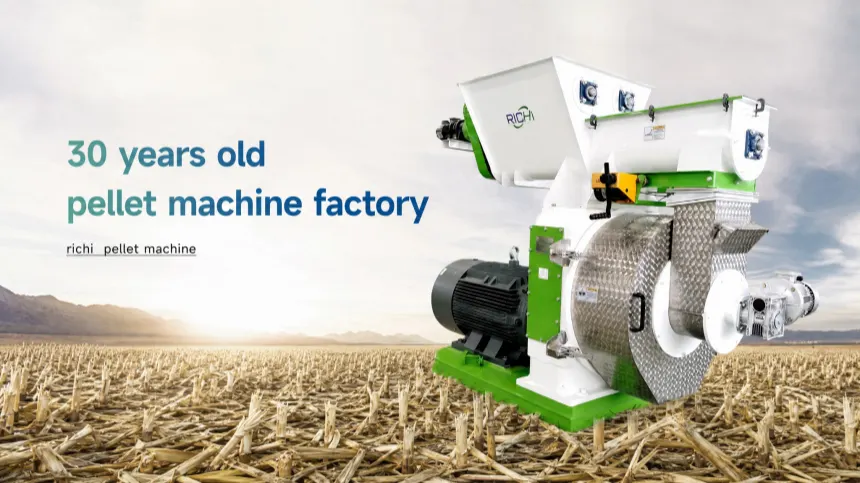
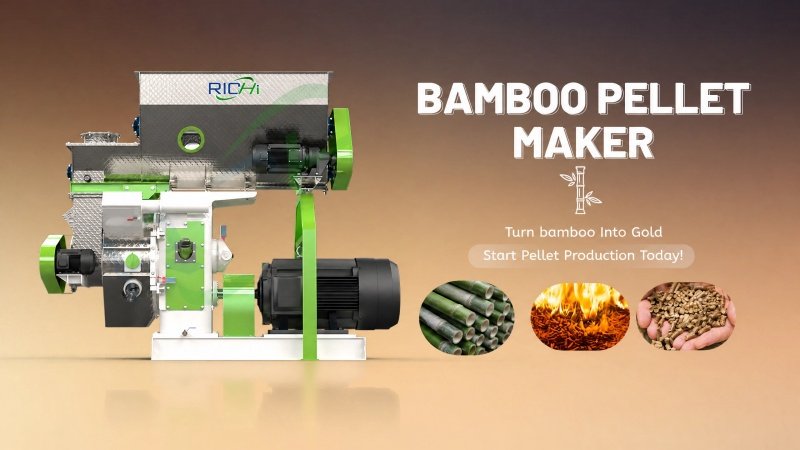
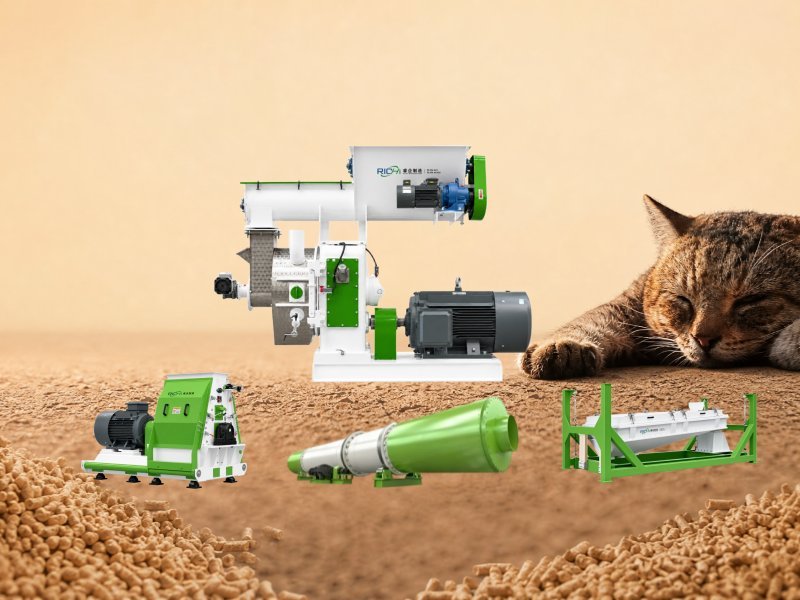
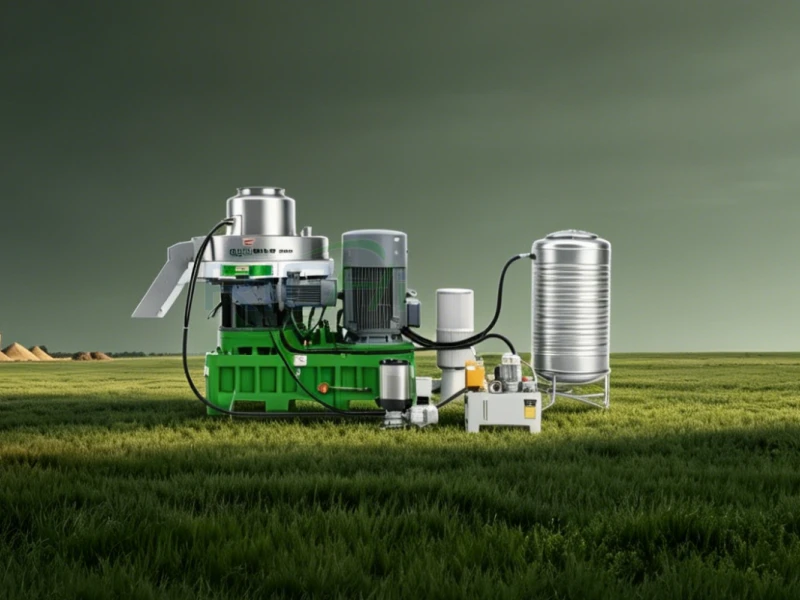
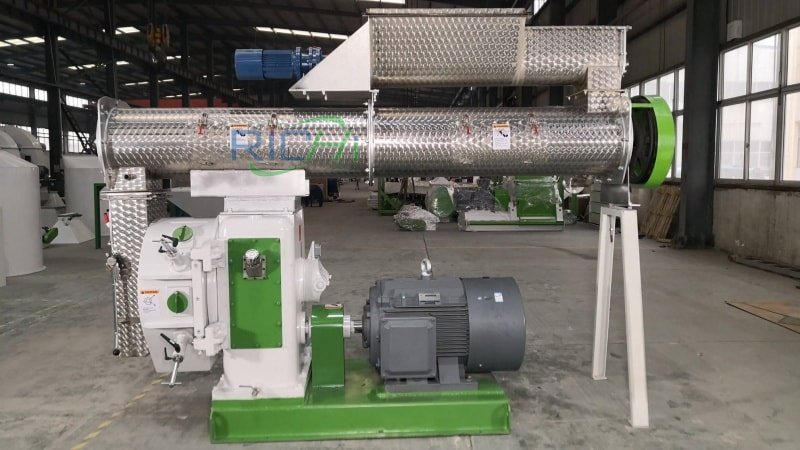
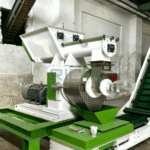
Pelleting is the core step. The corn stalk pellet machine presses the ground material through a die to form dense pellets. Ring die machines are usually preferred for high-capacity lines because they handle high volumes and produce more consistent pellets.
Cooling follows. Fresh pellets are hot and moist. They need to be cooled before storage or bagging. A counterflow cooler is standard in commercial lines.
Screening and bagging come last. Fines are separated and recycled. Finished pellets are bagged or loaded in bulk for transport.
Each of these steps has to be sized to match the others. A line with a large pellet mill but insufficient drying capacity will run below capacity. A line with excess grinding capacity but a small mill will waste energy.
Planning a High-Capacity Line
For large farm operations, a high capacity 2 t/h corn stalk pellet machine for large farm use is a common specification. Two tons per hour is a meaningful output. It is large enough to justify the investment in collection, drying, and storage infrastructure, but small enough to be manageable for a single farm or cooperative.
Planning a line at this scale requires attention to several factors.
Material supply is the first. A 2 t/h line running eight hours a day consumes about 16 tons of raw material per day. Over a season, that adds up quickly. The farm or project needs a reliable supply of corn stalks, either from its own fields or from neighboring farms.
Moisture management is the second. If the raw material arrives at 20 percent moisture and needs to be dried to 14 percent, the line needs drying capacity to remove that water. The energy cost of drying is significant, so it pays to store material properly and to process it when conditions are favorable.
Power supply is the third. A 2 t/h line draws substantial power, often in the range of 100 to 200 kW or more, depending on the equipment configuration. The site needs a stable power supply, or a generator, or a combination of both.
Labor is the fourth. A line at this scale can run with a small team if it is well designed, but it still needs operators, maintenance staff, and material handlers. Training matters, because poor operation leads to poor pellet quality and higher costs.
Storage is the fifth. Finished pellets need dry, protected storage. Raw material needs dry, protected storage. Both take space and investment.
pellet machine is one supplier category that covers equipment for biomass pelleting, including corn stalk applications. For projects that need a complete line rather than a single machine, reviewing the supplier’s approach to turnkey projects is a practical step. More detail on how these projects are structured is available here: check my source.
Die Selection and Maintenance for Corn Stalks
Die selection is one of the most important decisions in corn stalk pelleting. The wrong die leads to poor pellet quality, high energy consumption, and frequent replacement.
Compression ratio is the key variable. Corn stalks require a different ratio than soft feed ingredients. Too high, and the mill will overheat or stall. Too low, and the pellets will be soft and crumbly.
Die material matters too. Wear-resistant alloys extend die life, which matters when processing abrasive material. The upfront cost is higher, but the cost per ton of pellets is often lower.
Roller adjustment is also important. The gap between roller and die affects how effectively material is pressed through. Too loose, and the mill will not form good pellets. Too tight, and wear accelerates.
Maintenance schedules should be based on operating hours, not calendar time. A mill running corn stalks will wear faster than one running soft feed. Inspecting dies and rollers regularly, and replacing them before they fail, keeps the line running smoothly.
The Economics of Corn Stalk Pelleting
Corn stalk pelleting can be profitable, but the economics depend on several factors.
Feedstock cost is the first. If the stalks are already on the farm and would otherwise be waste, the cost is mainly collection and storage. If they must be purchased, the cost rises.
Processing cost is the second. Drying, grinding, pelleting, and cooling all consume energy. Labor and maintenance add to the total. The cost per ton depends on the efficiency of the line and the cost of power.
Product value is the third. Corn stalk pellets can be sold as fuel, used as bedding, or used on-site for heat or power. The value depends on the market. In regions with strong biomass demand, the value is higher. In regions without, it may be lower.
Scale is the fourth. Larger lines spread fixed costs over more tons, which reduces the cost per ton. But larger lines also require more capital and more feedstock. The right scale depends on the resources available.
Logistics is the fifth. Raw material and finished product both have to be transported. Low bulk density of raw stalks makes long-distance transport expensive. Pellets have higher density, which makes transport more economical.
Market Considerations
Corn stalk pellets compete with other biomass fuels, including wood pellets, agricultural residues, and other energy sources. The market varies by region.
In Europe, biomass demand is driven by renewable energy policies. In North America, demand comes from both residential heating and industrial applications. In Asia, demand is growing as countries look for alternatives to coal.
Corn stalk pellets have some advantages. They are renewable, low-carbon, and can be produced locally. They also have some disadvantages. They have lower energy density than wood pellets, and they produce more ash. That matters for some applications but not others.
The market also depends on the form of the product. Pellets for residential heating must meet strict quality standards. Pellets for industrial boilers can be less uniform. Pellets for bedding have different requirements again. Matching the product to the market is essential.
Environmental and Sustainability Angles
Corn stalk pelleting has a strong sustainability story, and it is worth understanding before investing.
Using agricultural residues for energy avoids the need to dispose of them by burning or landfilling. It reduces greenhouse gas emissions compared to fossil fuels. It provides an additional income stream for farmers. And it does not compete with food production in the way that some bioenergy crops do.
There are limits, however. Removing too much residue from fields can reduce soil organic matter and increase erosion. Sustainable removal rates vary by soil type, climate, and farming practice. A responsible project should account for these factors.
Ash disposal is another consideration. Corn stalk pellets produce more ash than wood pellets. The ash can be used as a soil amendment in some cases, but it needs to be managed properly.
Common Mistakes in Corn Stalk Pelleting Projects
Several mistakes come up repeatedly when projects are planned.
Underestimating moisture control is the most common. Corn stalks are often wetter than expected. Projects that do not plan for adequate drying capacity struggle to reach rated output.
Choosing the wrong die is another. Corn stalks require different die specifications than feed ingredients. Using a feed die for biomass leads to poor results.
Ignoring wear costs is a third. Dies and rollers wear faster on corn stalks. Projects that do not budget for replacement parts are surprised by operating costs.
Underestimating material handling is a fourth. Corn stalks are bulky and difficult to move. Conveyors, augers, and bins have to be designed for the material.
Skipping market research is a fifth. Producing pellets is one thing. Selling them profitably is another. Projects that do not understand their market end up with inventory they cannot move.
What a Well-Planned Project Looks Like
A well-planned corn stalk pelleting project has several characteristics.
Feedstock supply is secured before the equipment is ordered. Moisture management is designed into the system. Die selection is matched to the material. Maintenance schedules are realistic. Market channels are identified in advance. And the financial model accounts for the full cost of production, not just the machine.
The equipment exists to make this possible. More detail on the biomass pellet equipment used in these projects is available here: https://pelletmakermachine.com/biomass-pellet-machine/
Looking Ahead
Interest in agricultural residue pelleting is growing, driven by renewable energy policy and the search for new farm income streams. Corn stalks are one of the most abundant residues available, and pelleting offers a way to turn them into a product with real value.
The technology is proven. The equipment exists. What separates successful projects from unsuccessful ones is planning. Material supply, moisture control, die selection, maintenance, and market access all have to be addressed before the first pellet is made.
For farmers and project developers willing to do that work, corn stalk pelleting can be a practical and profitable addition to an agricultural operation.