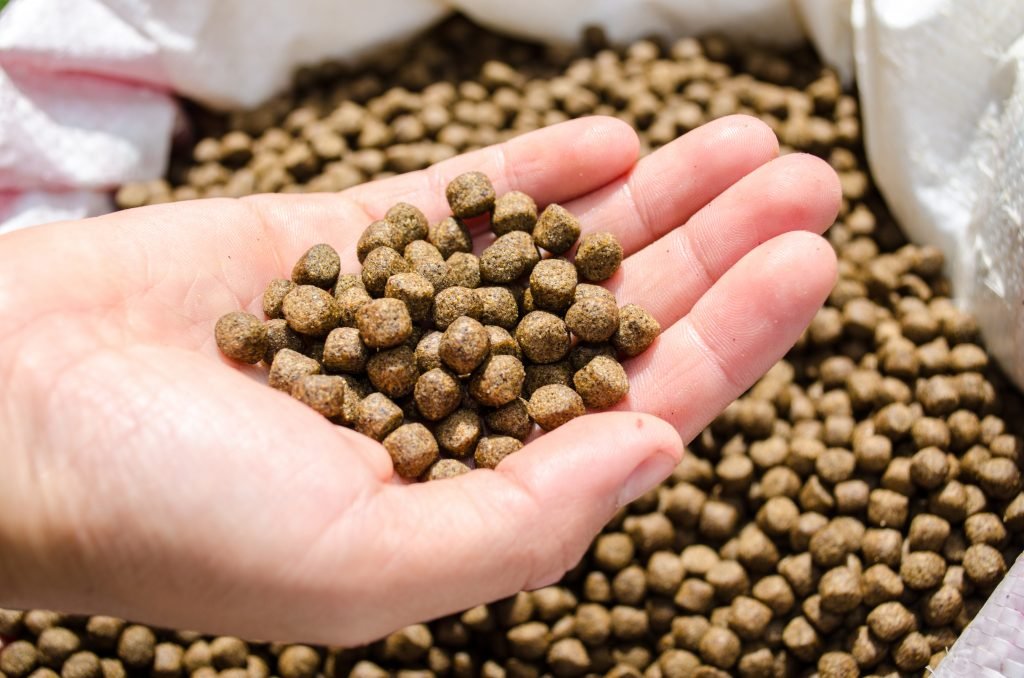


Sinking fish feed is widely used in aquaculture for fish species that feed below the water surface. Compared with floating fish feed, sinking pellets are designed to have a suitable density so that they move downward in water and remain available to fish at different feeding depths.
Producing high-quality sinking fish feed requires more than a single pellet-making machine. The raw materials need to be cleaned, crushed, accurately weighed, mixed, conditioned, pelletized, dried, cooled, screened, and sometimes coated before they are finally packaged.
For this reason, a commercial fish feed factory normally requires a complete processing line.
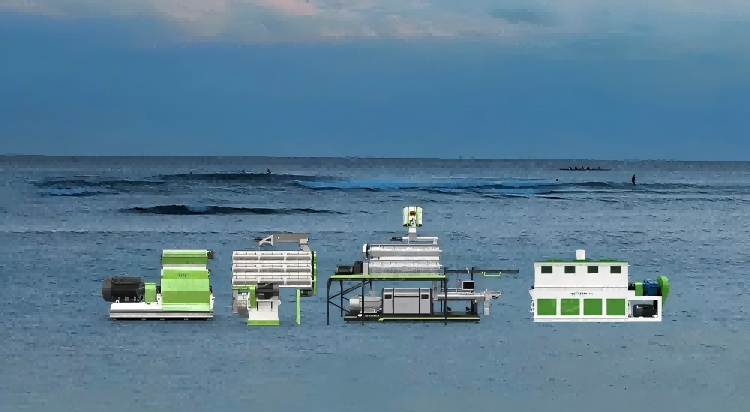
A sinking fish feed manufacturing machine should therefore be understood as a complete set of fish feed processing equipment rather than a single pellet mill. Depending on the formula, production capacity, pellet diameter, raw materials, and automation requirements, a complete system may include raw material cleaning equipment, hammer mills, superfine grinders, batching systems, feed mixers, conditioners, pelletizing equipment, dryers, coolers, screening machines, coating machines, packing machines, conveyors, elevators, storage systems, and electrical control equipment.
This article explains what equipment is needed to make sinking fish feed, what each machine does, and how these machines work together to form a complete production line.
What Is Sinking Fish Feed?
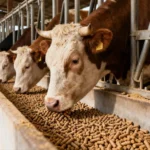
Sinking fish feed is formulated aquaculture feed that moves downward through the water after entering the feeding environment.
It is suitable for fish species and feeding systems where fish consume feed below the water surface.
Sinking feed is not simply defined by whether the pellet goes underwater. The finished product should also have appropriate pellet density, size, durability, water stability, and nutritional consistency.
Important characteristics include:
- Suitable sinking speed
- Uniform pellet diameter
- Good mechanical durability
- Appropriate density
- Good water stability
- Low powder content
- Consistent nutritional distribution
- Suitable moisture content
These characteristics depend on both the feed formula and the production process.
Therefore, selecting the right equipment is an important part of producing consistent sinking fish feed.
Complete Sinking Fish Feed Production Process
Before discussing individual machines, it is useful to understand the complete process.
A typical fish feed production line can be arranged as:
Raw Material Receiving → Storage → Cleaning → Crushing → Batching → Mixing → Conditioning → Pelletizing → Drying → Cooling → Screening → Coating → Packing
Not every project requires exactly the same configuration.
For example, some formulas may require superfine grinding, while others can use conventional hammer milling. Some products may require post-pellet oil coating, while others may not.
The equipment should therefore be selected according to the customer’s actual production requirements.
1. Raw Material Receiving Equipment
The first equipment needed in a commercial fish feed plant is the raw material receiving system.
Raw materials may arrive in bags or bulk vehicles.
A receiving system can include:
- Receiving hoppers
- Belt conveyors
- Screw conveyors
- Bucket elevators
- Bag unloading stations
- Storage bins
- Silos
The receiving system transfers materials into storage and processing areas.
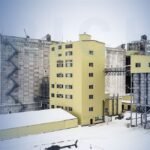
For larger plants, bulk materials such as corn, wheat, soybean meal, and other ingredients can be transferred directly into silos.
For smaller plants, bagged raw materials can be manually or mechanically loaded into receiving hoppers.
A well-designed receiving system improves material handling efficiency and reduces manual labor.
2. Raw Material Storage Equipment
Raw materials need to be stored before processing.
Storage equipment can include silos, bins, warehouses, and dedicated storage containers.
Different materials may require different storage conditions.
For example, moisture-sensitive ingredients should be protected from humidity, while oil-containing materials may require additional storage management.
Proper storage helps prevent:
- Moisture absorption
- Mold
- Pest infestation
- Cross-contamination
- Nutrient degradation
The storage capacity should be sufficient for the planned production schedule.
3. Raw Material Cleaning Equipment
Cleaning is an important part of fish feed production.
Raw materials may contain stones, metal fragments, dust, fibers, and other foreign materials.
These impurities can damage downstream machines and reduce product quality.
Typical cleaning equipment includes:
Cleaning Screen
A cleaning screen separates large and unwanted particles from raw materials.
Magnetic Separator
A magnetic separator removes ferrous metal particles.
Destoner
A destoner can be used when the raw materials contain stones or other high-density impurities.
Dust Collection System
Dust collection equipment helps control airborne dust during material handling and processing.
Cleaning equipment is therefore not simply an auxiliary component. It protects the rest of the production line and helps improve feed safety.
4. Hammer Mill
A hammer mill is one of the most common pieces of equipment used in feed processing.
Its primary function is to reduce the particle size of raw materials.
Ingredients such as corn, wheat, and other cereal materials can be processed through the hammer mill before batching and mixing.
Particle size affects:
- Mixing uniformity
- Pellet formation
- Pellet surface quality
- Pellet durability
- Feed digestibility
The appropriate grinding fineness depends on the formula and target pellet size.
For standard feed products, a hammer mill may be sufficient.
For some small-pellet aquatic feed formulas, finer grinding may be required.
5. Superfine Grinder
A superfine grinder may be added when the feed formula requires very small particle sizes.
This is particularly useful for certain aquatic feed products where smooth and compact pellets are required.
Compared with conventional crushing, superfine grinding can produce much finer material.
However, superfine grinding requires additional energy and may increase production costs.
Therefore, it should be selected based on the actual feed formula and product requirements.
Not every sinking fish feed plant needs a superfine grinder.
6. Automatic Batching System
Once raw materials have been ground, they need to be accurately weighed according to the formula.
An automatic batching system can weigh different ingredients according to predefined recipes.
This equipment is important because fish feed formulas may contain many ingredients in different proportions.
The batching system improves:
- Formula accuracy
- Production consistency
- Labor efficiency
- Batch management
- Production automation
Small-dose ingredients such as vitamins, minerals, amino acids, and other additives require particularly careful weighing.
For commercial feed factories, automatic batching can significantly improve production control.
7. Feed Mixer
After batching, the ingredients are transferred to a mixer.
The mixer combines the raw materials into a homogeneous mixture.
Uniform mixing is essential because the formula may contain both major ingredients and very small quantities of additives.
If mixing is poor, nutrient distribution between pellets may become inconsistent.
A suitable mixer should provide:
- Uniform mixing
- Short mixing cycles
- Low material residue
- Low ingredient segregation
- Reliable continuous operation
Depending on the production system, liquid ingredients can also be added during mixing.
8. Conditioner
Before pelletizing, the feed mixture may need conditioning.
A conditioner adjusts the temperature and moisture of the material.
Steam conditioning is widely used in commercial feed production.
It can improve the physical properties of the feed material and facilitate pellet formation.
For sinking fish feed, conditioning needs to be carefully controlled.
The objective is generally to create a compact and dense pellet rather than a highly expanded pellet.
The exact conditioning parameters depend on:
- Feed formula
- Raw material characteristics
- Moisture
- Pellet diameter
- Production capacity
- Pelletizing technology
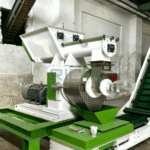
9. Fish Feed Pelletizing Equipment
Pelletizing equipment forms the prepared feed mixture into pellets.
A feed pellet mill compresses the material through die holes to produce pellets with a specific diameter.
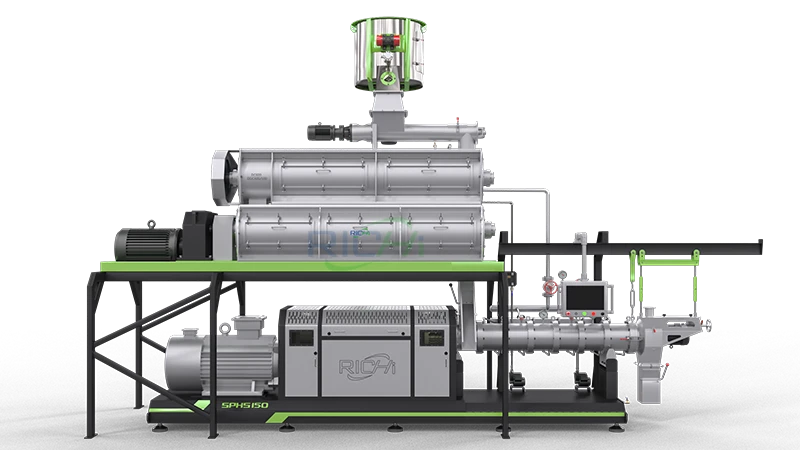
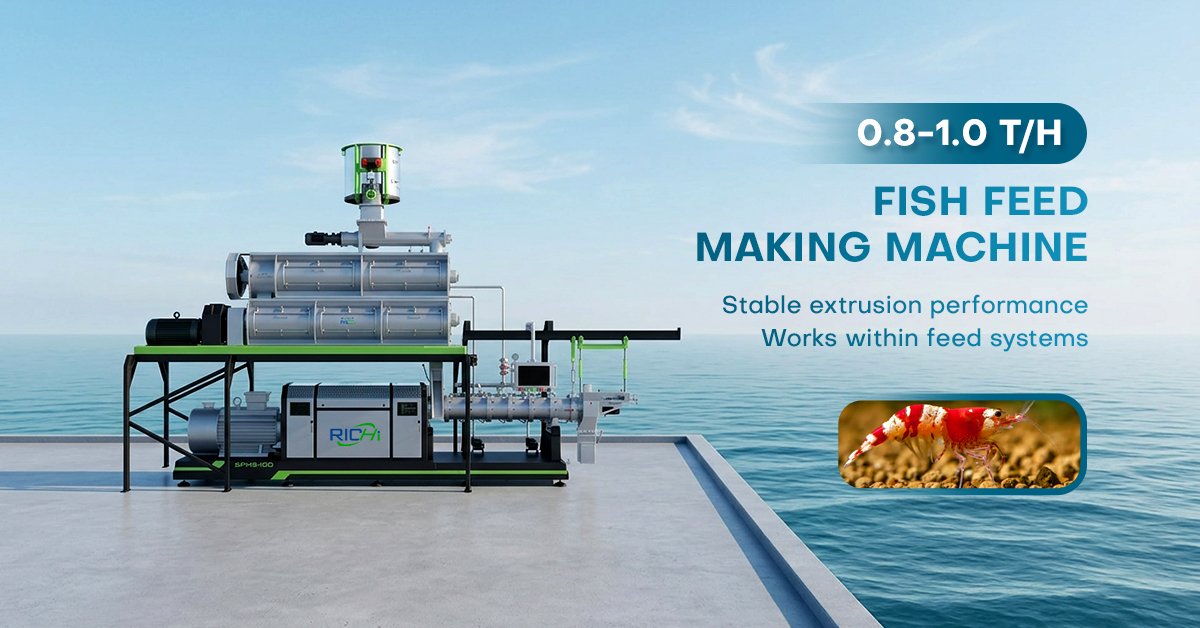
(Related machine: https://pelletisingmachine.com/fish-feed-pellet-making-machine/)
The pelletizing section influences:
- Pellet diameter
- Pellet density
- Pellet durability
- Pellet shape
- Production capacity
Important parameters include die hole diameter, compression ratio, roller adjustment, feed rate, and material moisture.
However, it is important to distinguish the pelletizing machine from the complete production system.
A pellet mill is only one part of the overall production line.
When a customer asks for a sinking fish feed manufacturing machine, they may actually require a complete system consisting of the pellet mill plus all the equipment needed before and after pelletizing.
10. Fish Feed Dryer
Fresh pellets normally contain relatively high moisture after pelletizing.
A dryer is therefore required to reduce moisture.
The dryer uses controlled hot air to remove moisture from the pellets.
The drying process should be stable and uniform.
Insufficient drying can reduce storage stability.
Excessive drying can waste energy and potentially affect feed quality.
Dryer capacity should be matched to the output of the pelletizing equipment.
If the dryer cannot process the full pellet output, it becomes a bottleneck in the production line.
11. Pellet Cooler
After drying, the pellets remain hot.
A cooler reduces the temperature of the pellets before screening and packaging.
Cooling provides several benefits:
- Reduces pellet temperature
- Stabilizes moisture distribution
- Improves handling
- Reduces condensation risk
- Prepares pellets for packaging
Industrial fish feed plants can use continuous pellet cooling systems designed for stable production.
12. Screening Machine
After cooling, the pellets are screened.
The screening machine separates qualified pellets from:
- Fine powder
- Broken pellets
- Oversized particles
- Other unwanted material
Screening is important for producing uniform feed.
It also helps improve the appearance and packaging quality of the final product.
Fines may be recycled into the production process depending on the plant configuration.
The screen mesh should be selected according to the target pellet diameter.
13. Coating Machine
Some sinking fish feed formulas require post-pellet coating.
A coating machine can apply oil, attractants, or other liquid additives onto the surface of the pellets.
Post-coating is useful when certain ingredients should be added after the main pelletizing process.
For example, some oils or heat-sensitive additives may be better applied after drying and cooling.
A good coating system should distribute liquid materials evenly.
Excessive coating on individual pellets can lead to uneven product quality.
14. Automatic Packing Machine
The final qualified pellets need to be packaged.
An automatic packing machine can weigh and fill bags according to the specified package size.
The packing section can include:
- Automatic weighing scale
- Bag filling system
- Bag sealing machine
- Coding system
- Bag conveyor
- Palletizing equipment
Proper packaging protects the feed from moisture, contamination, and physical damage.
It also makes transportation and storage more convenient.
15. Conveyors and Bucket Elevators
Although conveying equipment may not directly process the feed, it is essential in a complete production line.
Different sections of the factory need to be connected through:
- Screw conveyors
- Belt conveyors
- Bucket elevators
- Pneumatic conveying systems
- Other material handling equipment
The conveying system should provide smooth material flow and minimize excessive pellet impact.
Poor conveying design can cause pellet breakage and increase powder content.
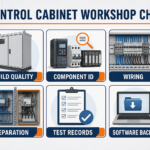
16. Electrical Control System
A commercial sinking fish feed plant also needs an electrical control system.
The control system can manage:
- Motor operation
- Material feeding
- Batching
- Mixing
- Pelletizing
- Drying
- Cooling
- Screening
- Packing
- Safety alarms
For highly automated plants, a centralized control system can integrate the major production processes.
Operators can monitor equipment status and production parameters from a central control panel.
What Equipment Is Needed for Different Production Capacities?
The equipment configuration depends heavily on production capacity.
Small-Scale Sinking Fish Feed Production
A smaller production line may include:
- Raw material cleaner
- Hammer mill
- Mixer
- Pellet mill
- Dryer
- Cooler
- Screen
- Packing machine
Some processes may be semi-automatic.
This type of system can be suitable for smaller farms or feed operations.
Medium-Scale Production
A medium-capacity plant may add:
- Automatic batching
- Additional grinding equipment
- Steam conditioning
- Automatic conveying
- Automatic packing
- Centralized control
This configuration can improve production efficiency and reduce manual labor.
Large Commercial Fish Feed Plant
A large commercial plant may include a complete automated system with:
- Raw material receiving system
- Large storage silos
- Cleaning section
- Multiple hammer mills
- Superfine grinding system
- Automatic batching
- High-efficiency mixing
- Conditioning system
- Pelletizing system
- Multi-stage drying
- Cooling
- Screening
- Post-coating
- Automatic packing
- Palletizing
- Centralized control system
The exact configuration should be determined through engineering design.
How Does Each Machine Affect Sinking Feed Quality?
Each machine has a different role in determining the final product.
Grinder
Controls particle size and influences pellet structure.
Batching System
Controls formula accuracy.
Mixer
Controls ingredient uniformity.
Conditioner
Controls moisture and temperature before pelletizing.
Pellet Mill
Controls pellet formation, density, and durability.
Dryer
Controls final moisture.
Cooler
Stabilizes temperature and moisture distribution.
Screen
Controls final pellet size and removes fines.
Coater
Controls the distribution of oil and certain additives.
Packing Machine
Protects the finished product during storage and transportation.
Because these stages are connected, the quality of the final feed depends on the overall system rather than one individual machine.
What Factors Should Be Considered When Choosing Equipment?
Selecting the correct equipment requires an understanding of the complete production requirements.
1. Raw Materials
The raw material type determines the grinding and mixing requirements.
For example, cereal-based formulas may require conventional grinding, while formulas requiring very fine particles may need superfine grinding.
2. Feed Formula
Different formulas have different processing characteristics.
The equipment should be selected according to the actual formula rather than using a generic configuration.
3. Pellet Diameter
The desired pellet size affects the die and screening system.
If several pellet sizes are required, the line should allow convenient adjustments.
4. Production Capacity
The capacity of every machine should be matched.
The grinder, mixer, pellet mill, dryer, cooler, screen, and packing machine should be able to handle the required output.
5. Automation
The desired automation level affects equipment selection and investment.
Semi-automatic systems can be suitable for smaller operations, while large factories may benefit from centralized automation.
6. Factory Layout
The available building space affects equipment arrangement.
The production line should provide logical material flow and sufficient maintenance space.
7. Future Expansion
If the customer expects production to increase in the future, the line can be designed with expansion possibilities.
How to Choose a Complete Sinking Fish Feed Manufacturing Machine
When purchasing a sinking fish feed manufacturing machine, buyers should first clarify that they need a complete production system rather than a single pelletizing machine.
The supplier should understand:
- Target fish species
- Feed formulas
- Raw materials
- Production capacity
- Pellet diameter
- Required sinking characteristics
- Automation level
- Factory dimensions
- Local energy conditions
- Packaging requirements
- Future expansion plans
Based on these factors, the supplier can develop a complete process flow and equipment configuration.
A proper equipment proposal should clearly identify the capacity and function of each major machine.
For example, the quotation should distinguish between:
Grinding Equipment → Batching Equipment → Mixing Equipment → Conditioning Equipment → Pelletizing Equipment → Drying Equipment → Cooling Equipment → Screening Equipment → Coating Equipment → Packing Equipment
This makes it easier to understand the complete investment and compare different production solutions.
Common Mistakes When Buying Fish Feed Equipment
Buying Only a Pellet Mill
One of the most common mistakes is assuming that a pellet mill alone can complete the entire production process.
In reality, commercial production requires many additional stages.
Ignoring Raw Material Characteristics
The same equipment configuration may not be suitable for every feed formula.
Raw materials should be analyzed before equipment selection.
Choosing Equipment Based Only on Capacity
A pellet mill may have a high nominal capacity, but if the dryer, cooler, or packing system is undersized, the actual production capacity will be limited.
Neglecting Future Expansion
A plant may initially meet current demand but become difficult to expand later.
Future production plans should be considered during the initial design.
Ignoring Maintenance
Equipment should be easy to inspect and maintain.
Wear parts should also be accessible for replacement.
RICHI Sinking Fish Feed Manufacturing Solutions
RICHI Machinery Manufacture provides complete fish feed production solutions for customers who need to manufacture sinking fish feed.
The equipment configuration can be customized according to production capacity, feed formula, raw materials, pellet diameter, factory layout, automation requirements, and other project conditions.
A complete line can include:
Raw Material Cleaning → Crushing → Superfine Grinding → Batching → Mixing → Conditioning → Pelletizing → Drying → Cooling → Screening → Coating → Packing
Not every project requires every machine. The configuration can be adjusted according to the actual feed formula and production requirements.
For example, a customer producing standard sinking pellets from relatively easy-to-process ingredients may require a conventional hammer mill.
A project requiring very fine particles for small-diameter aquatic feed may need a superfine grinding system.
If additional oil or functional additives are required, a post-pellet coating system can be included.
For large commercial factories, automatic batching, centralized control, automatic conveying, and automatic packaging can also be integrated.
RICHI focuses on complete process engineering rather than supplying only one machine. This means the sinking fish feed manufacturing machine can be designed as an integrated production system in which the grinding, batching, mixing, pelletizing, drying, cooling, screening, coating, and packing sections are matched with each other.
Frequently Asked Questions
What machines are needed to make sinking fish feed?
A typical production line may require a cleaner, hammer mill, batching system, mixer, conditioner, pelletizing machine, dryer, cooler, screening machine, coating machine, and packing machine.
Additional equipment such as storage bins, conveyors, bucket elevators, dust collectors, and control systems may also be required.
Is a fish feed pellet mill enough?
No. A pellet mill only performs the pelletizing stage.
Commercial sinking fish feed production normally requires equipment for raw material preparation, mixing, drying, cooling, screening, and packaging.
What is a sinking fish feed manufacturing machine?
In this context, it refers to a complete set of fish feed manufacturing and processing equipment used to produce sinking feed.
It is not the name of a single pellet mill.
Does every plant need a superfine grinder?
No. The need for superfine grinding depends on the feed formula, pellet size, fish species, and required feed quality.
What machine dries sinking fish feed?
A commercial fish feed dryer is used to reduce moisture after pelletizing.
Why is a cooler required after drying?
Cooling reduces pellet temperature and helps stabilize moisture before screening and packaging.
Can one line produce several pellet sizes?
Yes. With suitable pelletizing dies and screening configurations, a production line can often produce different pellet sizes.
Is a coating machine necessary?
Not always. It is mainly used when oil, attractants, or other suitable additives need to be applied after pelletizing.
Conclusion
Making sinking fish feed requires a complete processing system rather than a single piece of equipment.
The typical production process includes raw material receiving, storage, cleaning, crushing, batching, mixing, conditioning, pelletizing, drying, cooling, screening, coating, and packaging.
The main equipment can therefore include cleaners, hammer mills, superfine grinders, batching systems, mixers, conditioners, pellet mills, dryers, coolers, screening machines, coating machines, packing machines, conveyors, storage systems, and control systems.
The exact configuration depends on the raw materials, formula, target fish species, pellet diameter, production capacity, automation level, factory layout, and future expansion requirements.
When purchasing a sinking fish feed manufacturing machine, it is important to understand that this term refers to the complete fish feed processing system rather than a single pelletizing machine. The different processing sections need to be properly matched so that materials can move efficiently from raw material preparation to finished feed packaging.
A well-designed complete production line can provide more consistent processing, better equipment coordination, easier operation, and a stronger foundation for commercial sinking fish feed production.