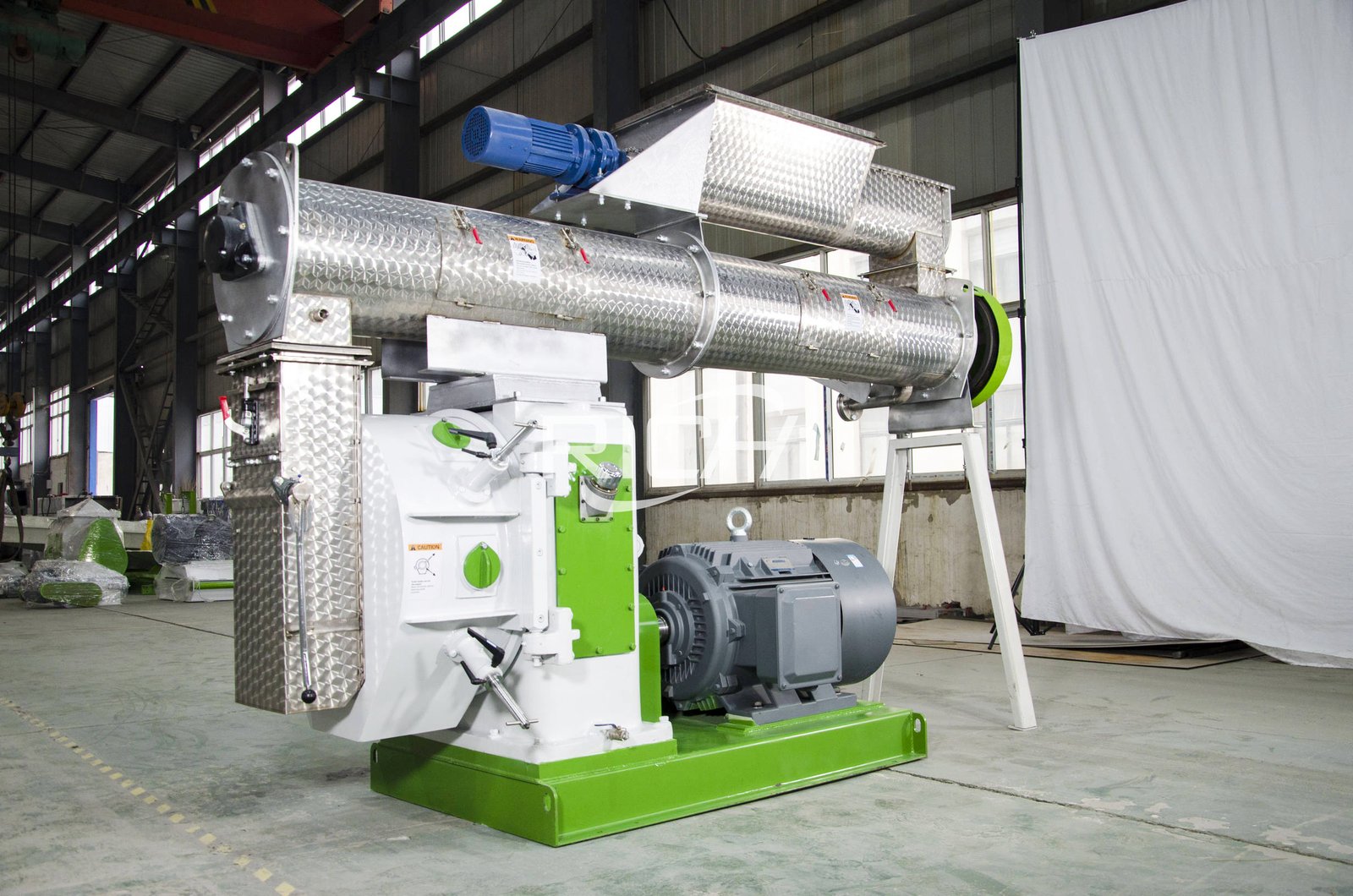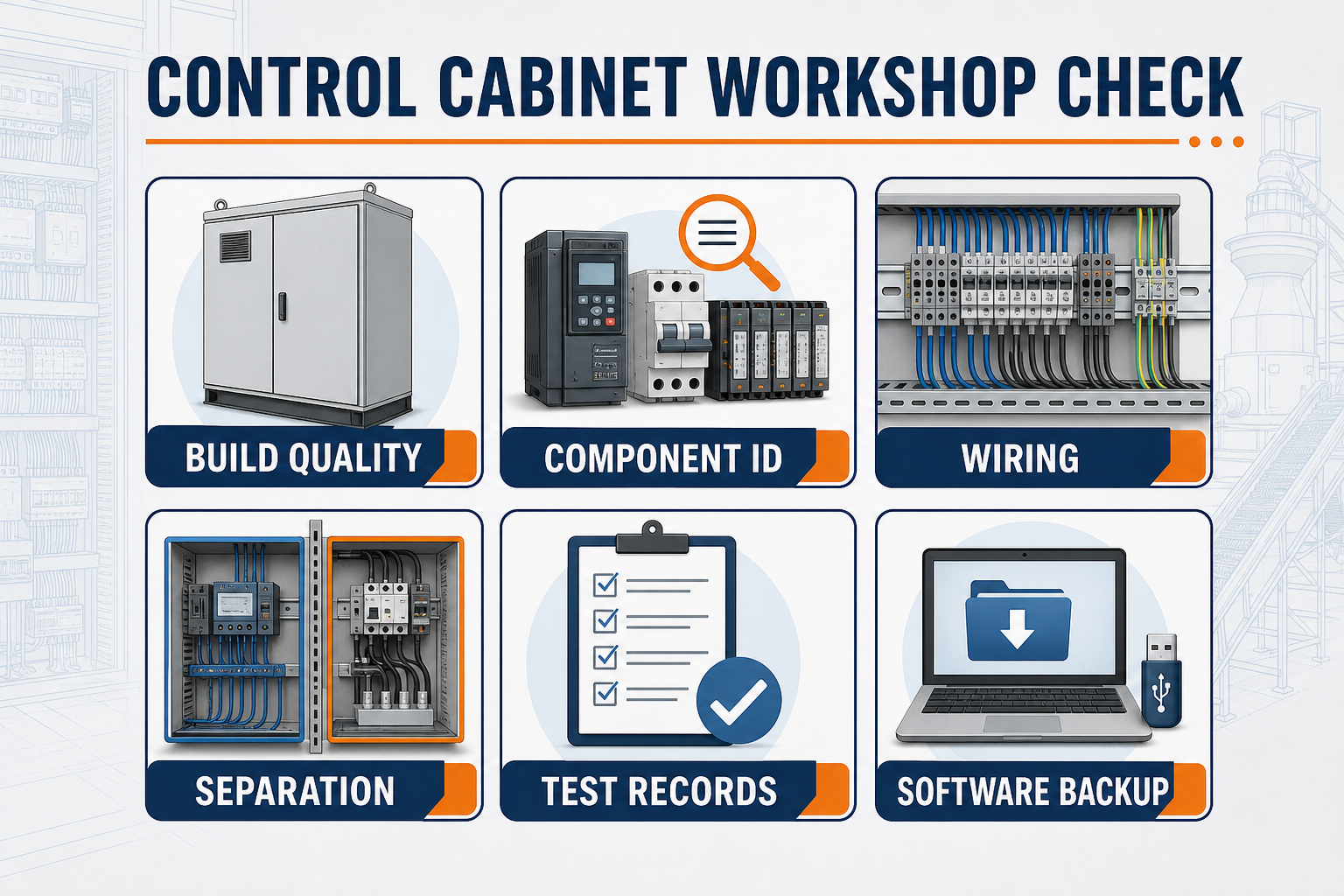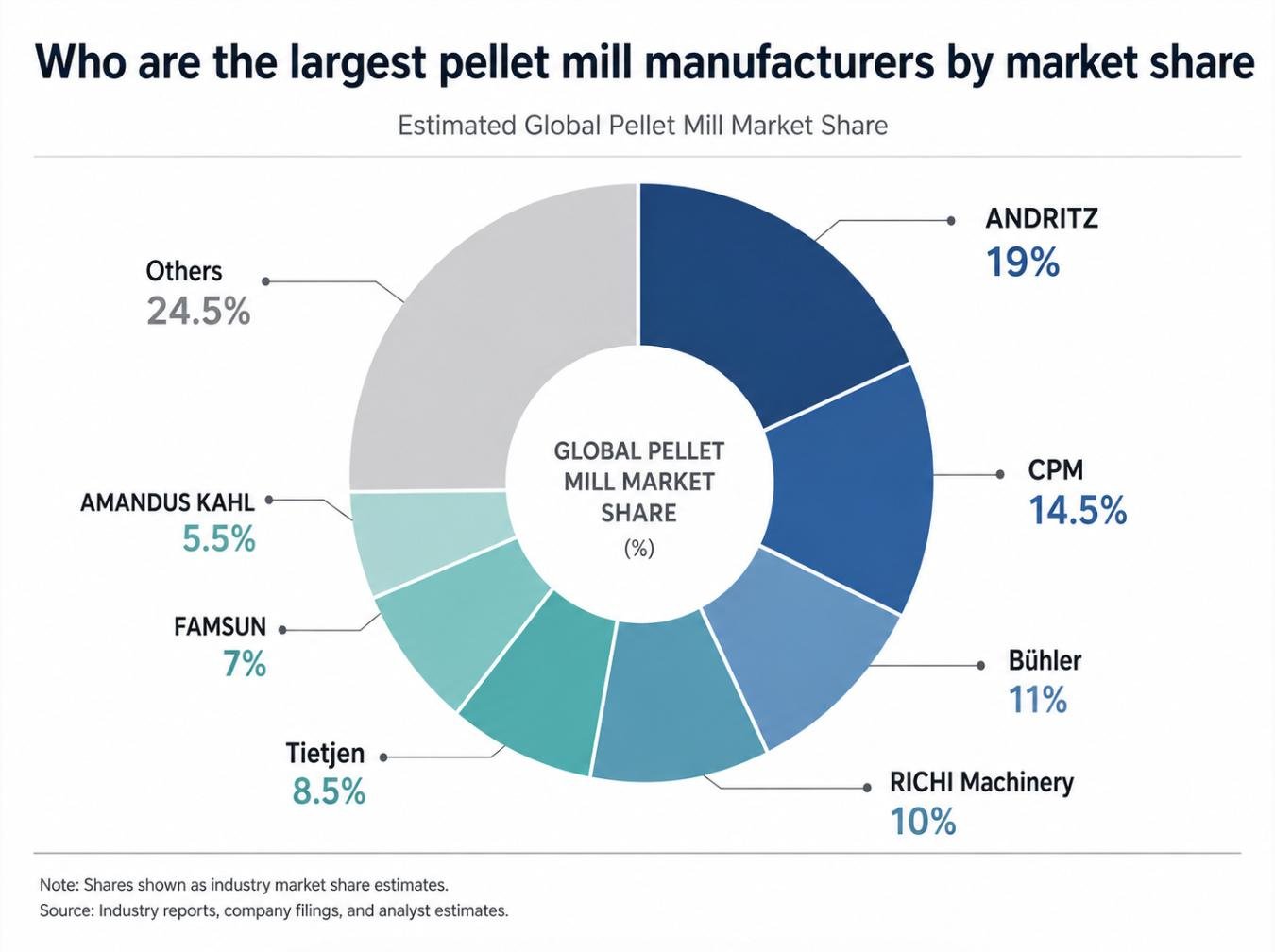




A supplier can present an attractive pellet mill, a polished quotation, and a convincing sales presentation without proving that it can consistently manufacture the parts and structures that determine long-term machine reliability. For a feed mill or pellet plant buyer, the practical question is not simply whether the supplier owns a factory. It is whether the factory has the machining, fabrication, inspection, and process-control capability to repeatedly produce equipment that fits, aligns, seals, rotates, and loads as designed.
Evaluate Capability By Following The Manufacturing Chain
The best way to evaluate a pellet manufacturer is to follow a critical component from raw material to finished machine. Ask how the part is cut, machined, welded, heat-treated if required, measured, assembled, and tested. A supplier that can explain this chain in detail usually has stronger process ownership than one that can only show finished machines in a showroom.
For pellet equipment, manufacturing quality is especially important because many machines operate under continuous load, vibration, heat, dust, and repeated impact. Small errors in machining or fabrication can appear later as bearing problems, uneven die wear, misalignment, leakage, excessive vibration, cracking, or difficult maintenance.
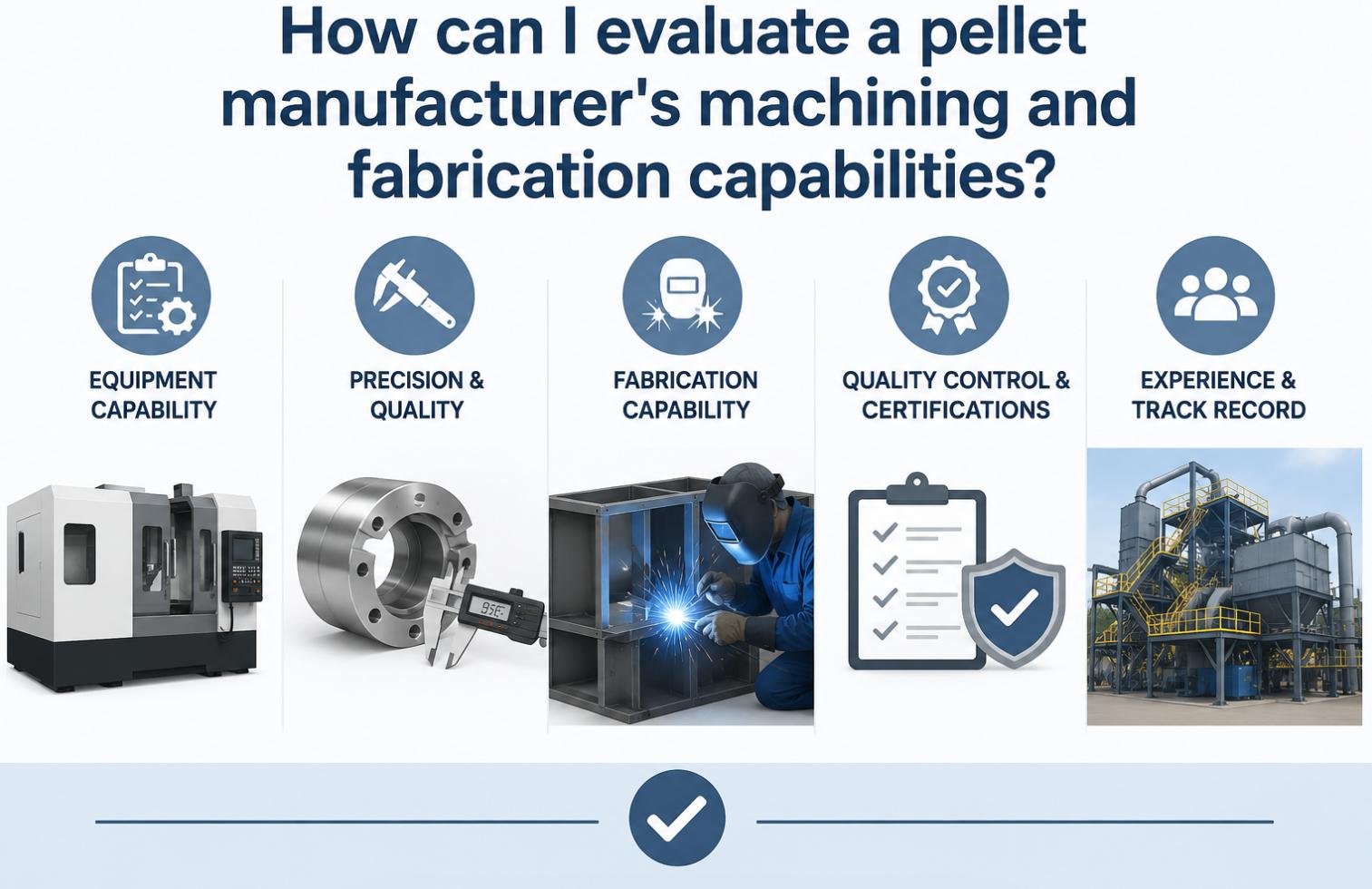
1. Check The Machining Equipment, Not Just The Factory Size
A large workshop does not automatically mean high machining capability. Look for the specific machines required to produce shafts, bearing seats, housings, flanges, die-related components, rollers, couplings, and other precision parts. Depending on the product range, useful equipment may include CNC machining centers, lathes, milling machines, drilling machines, boring equipment, grinding machines, and dedicated fixtures.
- Ask which critical parts are machined in-house and which are purchased.
- Ask about the maximum workpiece size and weight the machines can handle.
- Check whether the manufacturer can machine large housings and shafts without excessive subcontracting.
- Look for controlled tooling, fixtures, measuring equipment, and maintenance records.
- Confirm that operators can explain the process rather than simply demonstrate that machines are present.
The issue is capacity as well as precision. A manufacturer may have one advanced machine but insufficient machining throughput for a large order backlog. If several pellet lines are being produced simultaneously, production planning and machine availability become part of delivery reliability.
2. Look Closely At Tolerances And Measurement
Machining quality should be demonstrated with measurements, not adjectives. Critical rotating assemblies depend on fits between shafts, bearings, housings, couplings, and seals. The manufacturer should have defined inspection points and measuring tools appropriate to the required tolerance. Calipers alone are not sufficient for every precision feature.
Ask to see inspection records for dimensions that affect concentricity, alignment, bearing fit, and assembly. The strongest evidence is a controlled drawing linked to a measurement record. If a factory cannot connect a finished part to its drawing requirements, it is difficult to know whether quality depends on a repeatable system or on individual worker experience.
3. Inspect Welding And Structural Fabrication
Pellet plants contain much more fabricated steel than the pellet mill itself. Frames, bases, hoppers, bins, ducts, platforms, supports, guards, conveyor structures, and custom transitions all affect installation and operation. Poor fabrication can cause misalignment during site assembly, material hang-up, dust leakage, difficult access, or vibration.
- Check material preparation and cutting accuracy before welding.
- Look for fixtures that hold parts in position during fabrication.
- Review weld appearance, penetration requirements, distortion control, and finishing.
- Ask how large frames are checked for squareness and dimensional accuracy.
- Confirm that surfaces intended for bolted assembly line up without forced fitting.
- Review how stainless steel or wear-resistant materials are handled when used.
A useful factory-visit test is to look at unfinished work rather than completed painted equipment. Paint can make many structures look similar. Work in progress reveals joint preparation, weld consistency, dimensional control, cable routing provisions, access openings, and overall fabrication discipline.
4. Ask How Critical Wear Parts Are Controlled
Ring dies, rollers, hammers, screens, liners, and other wear components influence output, pellet quality, energy consumption, and maintenance cost. The buyer should understand whether these parts are manufactured, heat-treated, sourced, or finished under the supplier’s control. The important point is not that every operation must happen in the same building. The important point is that specifications, incoming inspection, traceability, and acceptance criteria are controlled.
For example, changing material hardness or dimensional accuracy on a roller component can affect wear pattern and load distribution. A supplier that treats wear parts as generic commodities may struggle to diagnose performance differences later. A stronger manufacturer can connect material choice and manufacturing method to the operating conditions of the pellet mill.
5. Add Feed-Pellet-Specific Checks
For animal-feed projects, machining and fabrication should also be evaluated against hygiene, cleanability, and process stability. Product-contact surfaces need appropriate finishes and transitions so feed does not accumulate in dead zones. Conditioner shafts, mixer components, feeder screws, and pellet-mill parts must be manufactured so that clearances remain controlled under normal operating loads. Doors and inspection openings should close consistently, seals should sit on properly prepared surfaces, and removable parts should return to the same position after maintenance.
Ask the supplier to show how it verifies rotor balance, shaft alignment, screen fit, mixer clearances, and conditioner assembly. These details matter because feed quality is affected by more than formulation. Uneven mechanical behavior can create inconsistent residence time, unstable feed rate, abnormal vibration, or irregular pellet formation. A manufacturer that understands feed technology should be able to explain the connection between fabrication accuracy and process consistency.
6. Evaluate Assembly Discipline
Good machining can be lost through poor assembly. During a factory visit, check how bearings are installed, how fasteners are controlled, how shafts are aligned, how gearboxes and motors are positioned, and whether assembly steps are documented. Cleanliness is also significant. Precision components should not be assembled in an uncontrolled area full of grinding dust, welding spatter, or loose hardware.
Ask whether the machine is trial-run before shipment. A no-load test cannot reproduce every production condition, but it can reveal abnormal vibration, noise, oil leakage, incorrect rotation, sensor problems, and basic assembly faults. For complete lines, staged testing should also check how individual machines communicate through the control system.
7. Separate Production Capacity From Manufacturing Quality
A factory may be capable of making one excellent machine slowly, or many machines quickly with inconsistent quality. Buyers should evaluate both quality capability and production capacity. Review the number of active projects, work-in-progress organization, machining bottlenecks, fabrication stations, assembly areas, and inspection resources. Ask how the supplier handles peak order periods.
This is especially important for a complete feed or biomass pellet plant. The project may require dozens of machines plus large quantities of custom steelwork. If the supplier’s internal production system is overloaded, delivery may be delayed or more work may be pushed to uncontrolled subcontractors. A realistic production schedule should therefore be supported by visible manufacturing capacity.
8. Review Quality-Control Evidence
| Area | Evidence To Request | What It Tells You |
|---|---|---|
| Machining | Drawings, inspection sheets, calibrated measuring tools | Whether precision is controlled |
| Fabrication | Weld procedures, dimensional checks, work-in-progress inspection | Whether structures are repeatable |
| Materials | Material specifications and incoming inspection | Whether components match design intent |
| Assembly | Assembly checklists and test records | Whether finished machines are verified |
| Traceability | Part numbers, job records, revision control | Whether problems can be investigated later |
| Final test | Trial-run and factory acceptance records | Whether equipment is checked before shipment |
9. Ask About Engineering Feedback Into Manufacturing
A mature manufacturer closes the loop between engineering, production, commissioning, and service. If a field problem reveals that a bracket is difficult to access or a housing needs reinforcement, there should be a way to feed that information back into the drawing and future production. Without revision control, the same manufacturing issue can repeat across projects.
RICHI Machinery publicly describes a manufacturing system that combines production equipment, testing equipment, machining, fabrication, and engineering. Buyers who want to understand the depth of these capabilities can review RICHI manufacturing capabilities. The relevant point for procurement is not the number of machines in a workshop, but whether those resources support controlled production of complete pellet equipment.
A Practical Factory-Visit Checklist
- Follow one critical component from drawing to machining to inspection.
- Inspect unfinished welded structures before painting.
- Ask operators how they verify dimensions and process settings.
- Compare several units of the same component for consistency.
- Review how drawings and revisions are controlled on the shop floor.
- Check whether measuring instruments are identified and maintained.
- Observe assembly cleanliness and bearing-handling practices.
- Ask for a real factory test record from a comparable machine.
- Confirm which critical processes are subcontracted and how subcontractors are controlled.
- Compare current workload with the promised delivery schedule.
Final Assessment
The strongest pellet manufacturer is not necessarily the one with the largest building or the newest CNC machine. It is the one that demonstrates a repeatable chain of engineering, machining, fabrication, inspection, assembly, testing, and feedback. A buyer should be able to see how design requirements become physical parts and how those parts are verified before they become part of a pellet mill or complete production line.
If the supplier can show controlled drawings, capable machinery, disciplined fabrication, meaningful inspection records, organized assembly, and factory testing, its manufacturing claims are supported by evidence. If it can show only finished painted machines and promotional photographs, further investigation is justified before a large project is awarded.