


The aquaculture industry has become one of the fastest-growing sectors in global food production. As demand for fish and seafood continues to increase, fish farming has become an essential solution for meeting the world’s protein needs. However, the success of aquaculture depends largely on one critical factor: feed quality. High-quality aquatic feed directly influences fish growth, health, feed conversion efficiency, survival rates, and overall farm profitability.
Aquatic feed manufacturing is the process of transforming raw nutritional ingredients into scientifically formulated feed products that meet the dietary requirements of different aquatic species. Whether producing feed for tilapia, carp, catfish, salmon, shrimp, or other aquatic animals, the manufacturing process must ensure nutritional balance, pellet stability, digestibility, and feed safety.
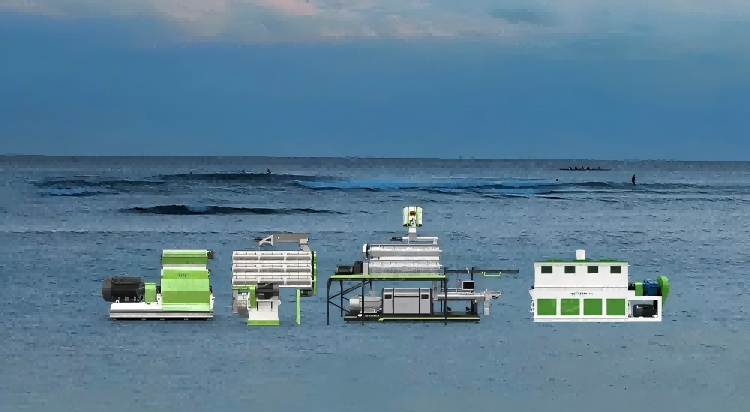
Modern aquatic feed production involves multiple stages, including raw material selection, grinding, mixing, conditioning, pelletizing or extrusion, drying, cooling, screening, packaging, and storage. Advanced machinery and quality control systems ensure that each stage contributes to the production of high-performance feed. Equipment investment is also an important consideration for feed manufacturers, and factors such as fish pellet machine price often play a significant role in planning and budgeting a feed production facility.
The aquatic feed manufacturing process is a combination of nutritional science, engineering technology, and production management. Every step is designed to maximize feed quality while minimizing waste and production costs.
The process begins with raw material selection. High-quality feed starts with high-quality ingredients. Aquatic feed formulations typically contain protein sources, energy sources, vitamins, minerals, oils, and specialized additives. Common protein ingredients include fish meal, soybean meal, cottonseed meal, sunflower meal, and other plant or animal protein sources.
Energy ingredients often include wheat flour, corn, rice bran, and other carbohydrate-rich materials. Fish oils and vegetable oils provide essential fatty acids, while vitamin and mineral premixes ensure complete nutrition. Depending on the species being fed, feed formulations may vary significantly. Carnivorous fish generally require higher protein levels than herbivorous or omnivorous species.
Raw material quality directly affects feed performance. Therefore, manufacturers carefully inspect ingredients for freshness, moisture content, contamination, and nutritional value before they enter production. Poor-quality ingredients can lead to reduced growth rates, disease susceptibility, and lower feed efficiency.
After raw material selection, the next stage is grinding. Most ingredients arrive in different particle sizes and must be reduced to a uniform consistency before mixing. Grinding is usually performed using hammer mills or other specialized crushing equipment.
The purpose of grinding is to improve ingredient uniformity and digestibility. Smaller particles mix more evenly and create stronger pellets during processing. Fine grinding is especially important in aquatic feed production because fish have relatively short digestive systems and require highly digestible feed.
Particle size requirements vary depending on the target species and feed type. Starter feeds for fish larvae require extremely fine particles, while grower feeds can use slightly larger particle sizes. Proper grinding contributes to better pellet quality and improved nutrient absorption.
Once grinding is complete, ingredients move to the batching and weighing stage. Accurate ingredient measurement is essential because aquatic feed formulations are carefully balanced to meet nutritional requirements. Automated batching systems ensure precise ingredient proportions and reduce human error.
Each ingredient is weighed according to a specific formula developed by nutritionists. These formulations are designed to optimize growth, health, and feed efficiency while controlling production costs. Precision during batching is critical because even small deviations can affect feed quality and fish performance.
Following batching, ingredients enter the mixing stage. Mixing ensures that all components are distributed uniformly throughout the feed. This is particularly important because aquatic feeds contain numerous micro-ingredients such as vitamins, minerals, amino acids, enzymes, and feed additives.
A high-quality mixer creates a homogeneous blend in which every pellet contains the same nutritional profile. Uniform mixing prevents nutrient deficiencies and ensures consistent fish performance across the entire population.
After mixing, the feed enters the conditioning stage. Conditioning involves adding steam and moisture to the feed mixture before pelletizing or extrusion. This process softens ingredients, improves binding properties, and enhances starch gelatinization.
Conditioning also improves feed safety. The heat generated during conditioning helps reduce harmful microorganisms, bacteria, and pathogens that may be present in raw materials. Improved sanitation contributes to healthier aquaculture systems and reduces disease risks.
The next stage is one of the most important parts of aquatic feed manufacturing: pelletizing or extrusion.
Pelletizing is commonly used for sinking feeds, while extrusion is often used for floating feeds. Both processes transform powdered feed into compact pellets, but they operate differently.
In pelletizing, the conditioned feed is compressed through a die using rollers. The feed material is forced through small openings, forming cylindrical pellets that are cut to the desired length. Pellet mills are widely used in aquatic feed production due to their efficiency and reliability.
For investors planning feed manufacturing facilities, fish pellet machine price is often a key consideration during equipment selection. Pellet machine costs vary depending on production capacity, automation level, die configuration, and overall machine quality. While lower-cost machines may reduce initial investment, high-quality equipment generally provides better performance, durability, and long-term profitability.
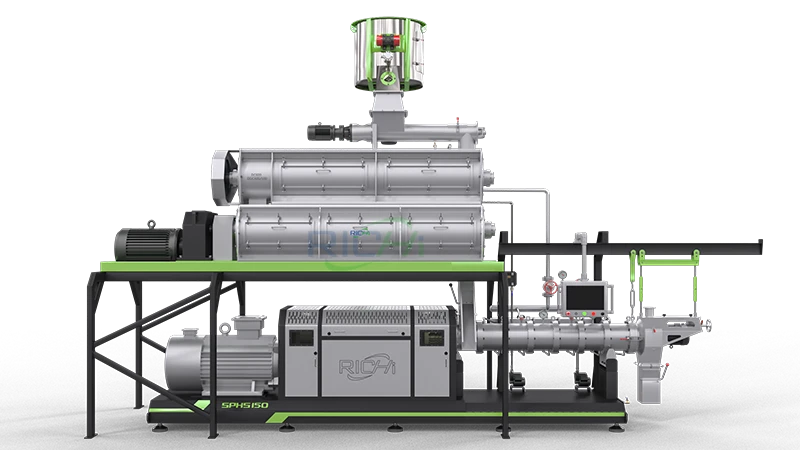
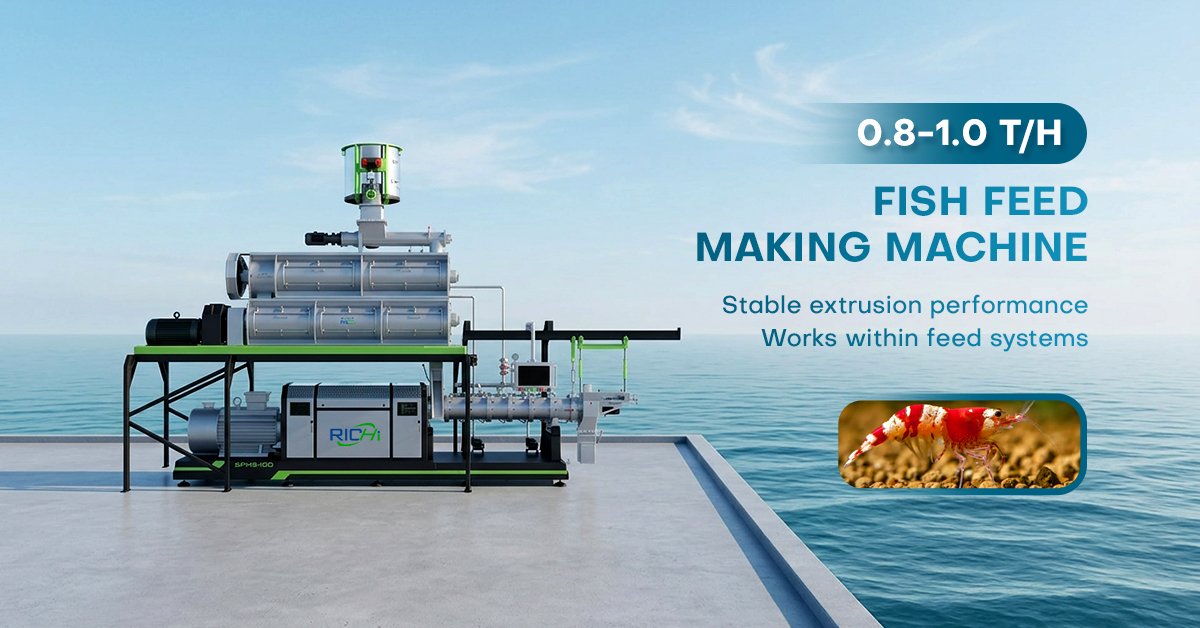
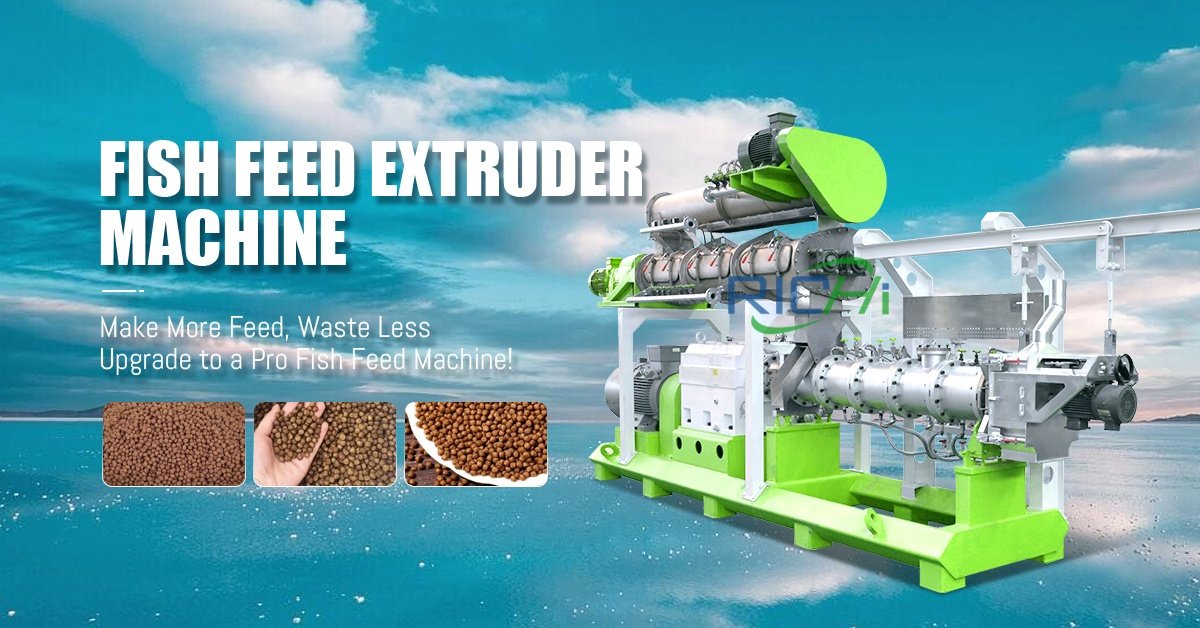
Extrusion technology is increasingly popular in aquatic feed production because it can produce floating feed. During extrusion, feed ingredients are exposed to high temperature, pressure, and mechanical shear. When the feed exits the extruder, pressure drops suddenly, causing expansion and creating porous pellets that float on water.
Floating feed offers several advantages. Farmers can easily monitor feeding behavior, reduce waste, and adjust feeding rates according to fish appetite. Floating pellets also remain stable on the water surface for longer periods, improving feed utilization.
Whether using pelletizing or extrusion, the resulting feed pellets must have the correct size, density, hardness, and water stability. These characteristics directly influence feeding efficiency and fish growth performance.
https://richipelletizer.com/fish-feed-pellet-making-machine
After pellet formation, the feed moves to the drying stage. Drying reduces moisture content to safe levels and improves pellet durability. Excess moisture can lead to mold growth, spoilage, and nutrient degradation during storage.
Drying systems use controlled heat and airflow to remove moisture while preserving nutritional quality. Proper drying is especially important for extruded feeds, which typically contain higher moisture levels after processing.
Once drying is complete, pellets enter the cooling stage. Cooling stabilizes pellet structure and prevents condensation during storage. Hot pellets are more fragile and susceptible to damage, so reducing temperature improves durability and shelf life.
Cooling also helps maintain feed quality by preventing nutrient degradation caused by excessive heat exposure. Proper cooling ensures that pellets remain intact during transportation and handling.
The next stage is screening. Screening equipment separates properly formed pellets from broken particles, dust, and fines. Uniform pellet size is important because inconsistent pellets can affect feeding behavior and growth performance.
Broken pellets and fines are often recycled back into the production process, reducing waste and improving manufacturing efficiency. Screening also enhances product appearance and quality consistency.
Following screening, some feed products may undergo coating. During coating, oils, attractants, vitamins, or specialized additives are applied to pellet surfaces. Vacuum coating technology is often used to improve nutrient retention and enhance feed performance.
Coating provides several benefits. It increases energy content, improves palatability, and allows manufacturers to add heat-sensitive nutrients after the pelletizing process. This helps maintain nutritional integrity while improving feed effectiveness.
Once production is complete, the feed enters the packaging stage. Packaging protects feed from moisture, contamination, and physical damage during storage and transportation. Modern packaging systems automatically weigh, fill, seal, and label feed bags.
Packaging sizes vary depending on market requirements. Small bags may be sold to local fish farmers, while larger bulk packaging is commonly used by commercial aquaculture operations.
Storage is the final stage of the aquatic feed manufacturing process. Proper storage conditions are essential for preserving feed quality. Feed should be kept in dry, cool, and well-ventilated environments away from direct sunlight and pests.
(Learn more about modern aqua feed plant)
Poor storage conditions can lead to mold growth, oxidation of fats, nutrient degradation, and reduced feed performance. Therefore, inventory management and storage monitoring are important components of feed production operations.
Quality control plays a crucial role throughout the entire manufacturing process. Feed manufacturers routinely test raw materials, intermediate products, and finished feed to ensure compliance with nutritional specifications and quality standards.
Laboratory analyses may include protein content, fat levels, moisture content, amino acid profiles, pellet durability, water stability, and microbiological testing. These quality control procedures help maintain product consistency and customer confidence.
Automation has become increasingly important in modern aquatic feed manufacturing. Advanced production systems use computerized controls to manage ingredient dosing, processing temperatures, moisture levels, machine speeds, and production flow.(click reference)
Automation improves efficiency, reduces labor costs, and ensures consistent product quality. It also allows manufacturers to monitor production data in real time and make adjustments when necessary.
Energy efficiency is another important consideration in feed manufacturing. Modern equipment is designed to reduce electricity consumption while maintaining high production capacity. Efficient machines lower operating costs and contribute to sustainable production practices.
For new investors entering the industry, evaluating fish pellet machine price is only one part of the overall investment decision. Factors such as machine reliability, production efficiency, maintenance requirements, energy consumption, and after-sales support are equally important. A higher-quality machine may require a larger initial investment but often provides greater long-term value through improved performance and reduced operating costs.
Environmental sustainability is becoming a major focus in aquatic feed manufacturing. Feed producers are increasingly using alternative protein sources such as insect meal, algae, microbial proteins, and plant-based ingredients to reduce dependence on traditional fish meal.
Sustainable feed production helps protect marine ecosystems while supporting the continued growth of aquaculture. Improved feed efficiency also reduces waste output and minimizes environmental impact.
Future developments in aquatic feed manufacturing are expected to include artificial intelligence, precision nutrition systems, advanced ingredient technologies, and smarter production equipment. These innovations will further improve feed quality, production efficiency, and environmental sustainability.
In conclusion, the aquatic feed manufacturing process is a sophisticated and highly controlled system that transforms raw ingredients into nutritionally balanced feed for aquaculture species. Each stage—from raw material selection and grinding to mixing, conditioning, pelletizing, drying, cooling, screening, packaging, and storage—plays a critical role in ensuring feed quality and performance.
Modern feed production technologies allow manufacturers to produce feeds that support faster growth, better health, improved feed conversion, and higher profitability for fish farmers. Equipment selection is an important part of this process, and considerations such as fish pellet machine price often influence investment decisions for feed producers.
As aquaculture continues to expand worldwide, efficient and high-quality feed manufacturing will remain essential for supporting healthy fish production, sustainable farming practices, and global food security.(Richi Machinery)